Building of “Piety” “Tender to Rose of Devon”….Morgan Giles meets Stuart Turner
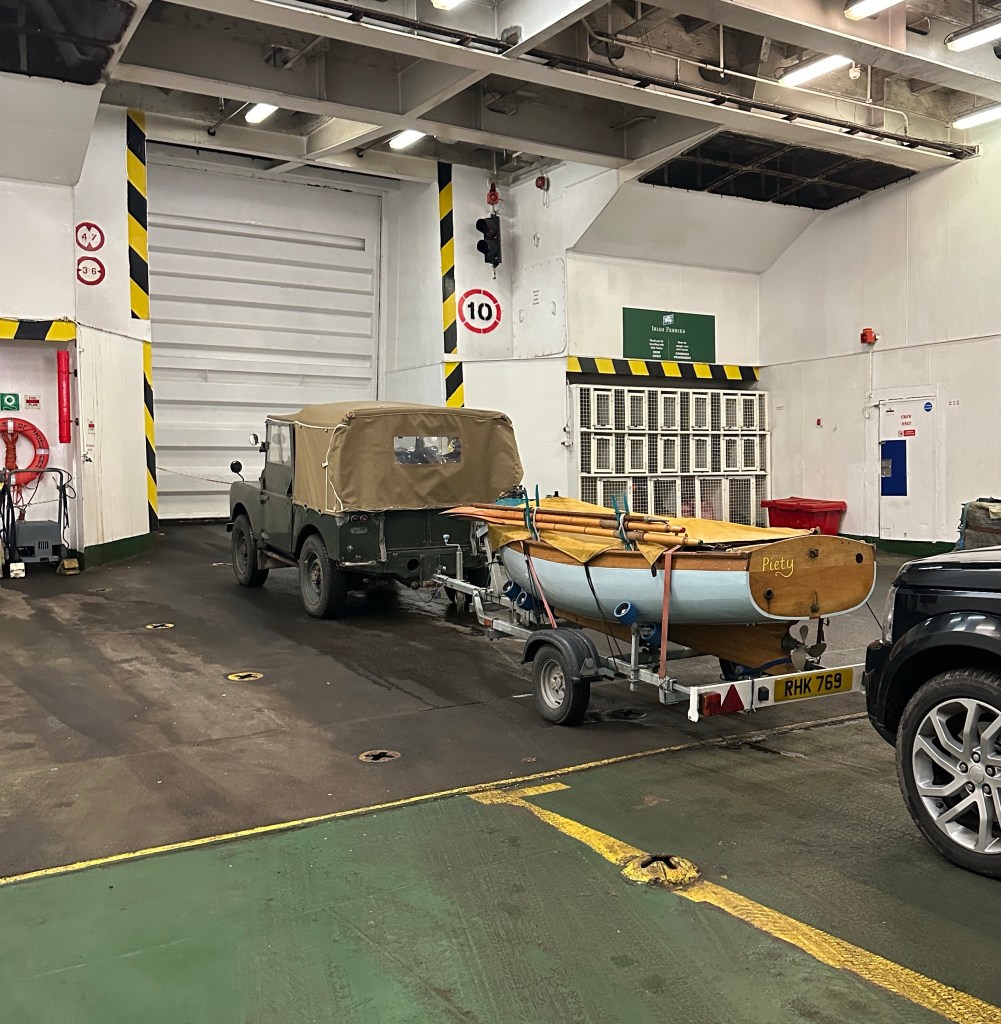
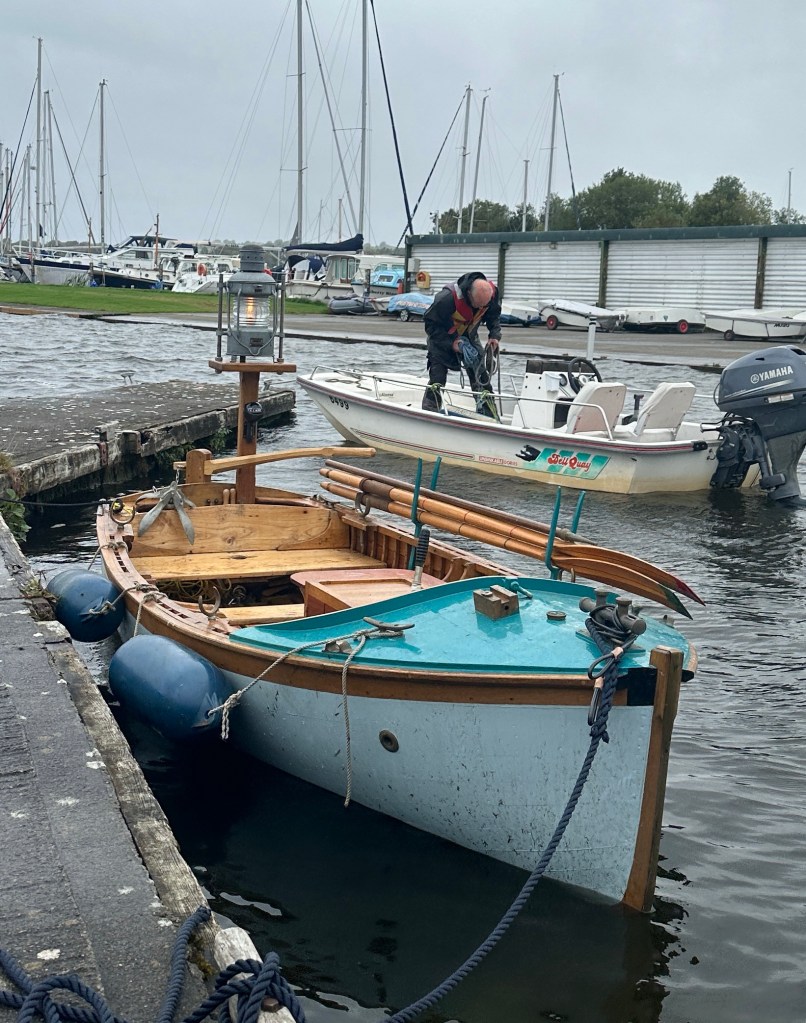
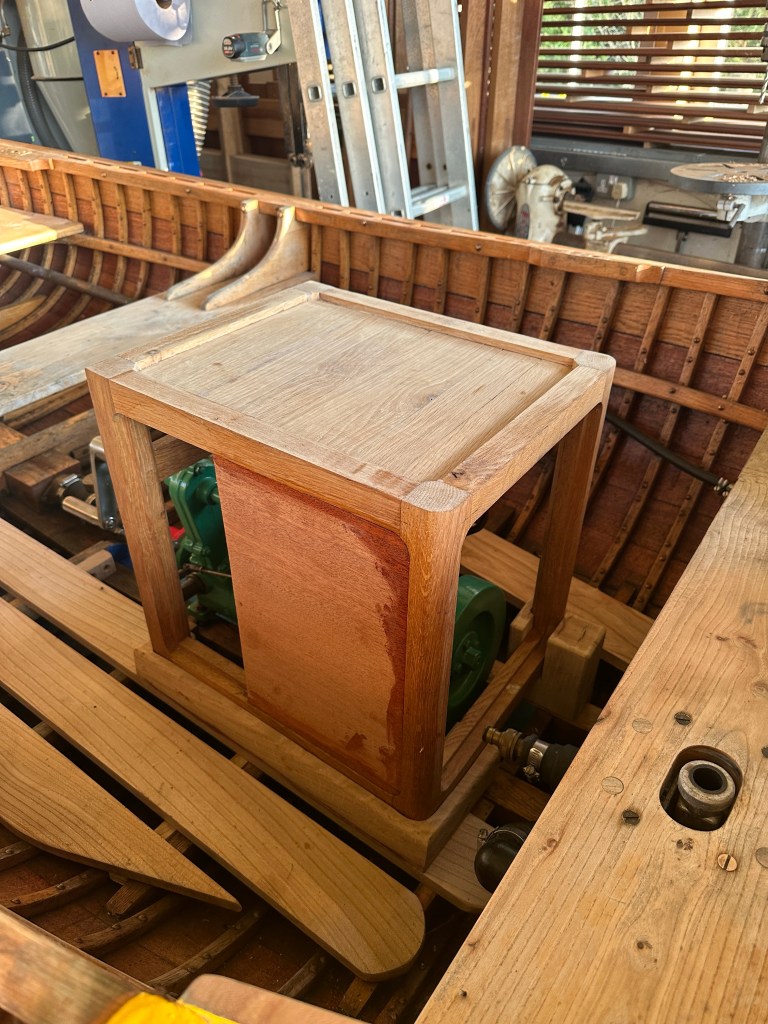
On the ferry at Pembroke docks off to Ireland on “Sea Trials”!Getting ready at the Yacht Club Loch DergOn the first day we did some rowing and not very successfully.. worked better once the rudder and tiller were shipped on board.. I need to ensure the engine is totally reliable..Cracked it! About 3 hrs under engine power at full load… steaming speed 6kn. Initially I needed to improve the water intake flow and then something quite simple… increase the tick over by adding a couple of washers to the throttle lever and “bingo”… fully operational. Tick over is apparently an issue with these engines and so changing direction can cause a cut out. Engine cut out whilst hot involves a hand crank restart so best avoided. I stop the engine by turning the fuel supply off … using Aspen 2stroke fuel for the time being.It’s time to do the engine box because I am getting some water in the engine gear box and the sole boards..Now… that’s storage!
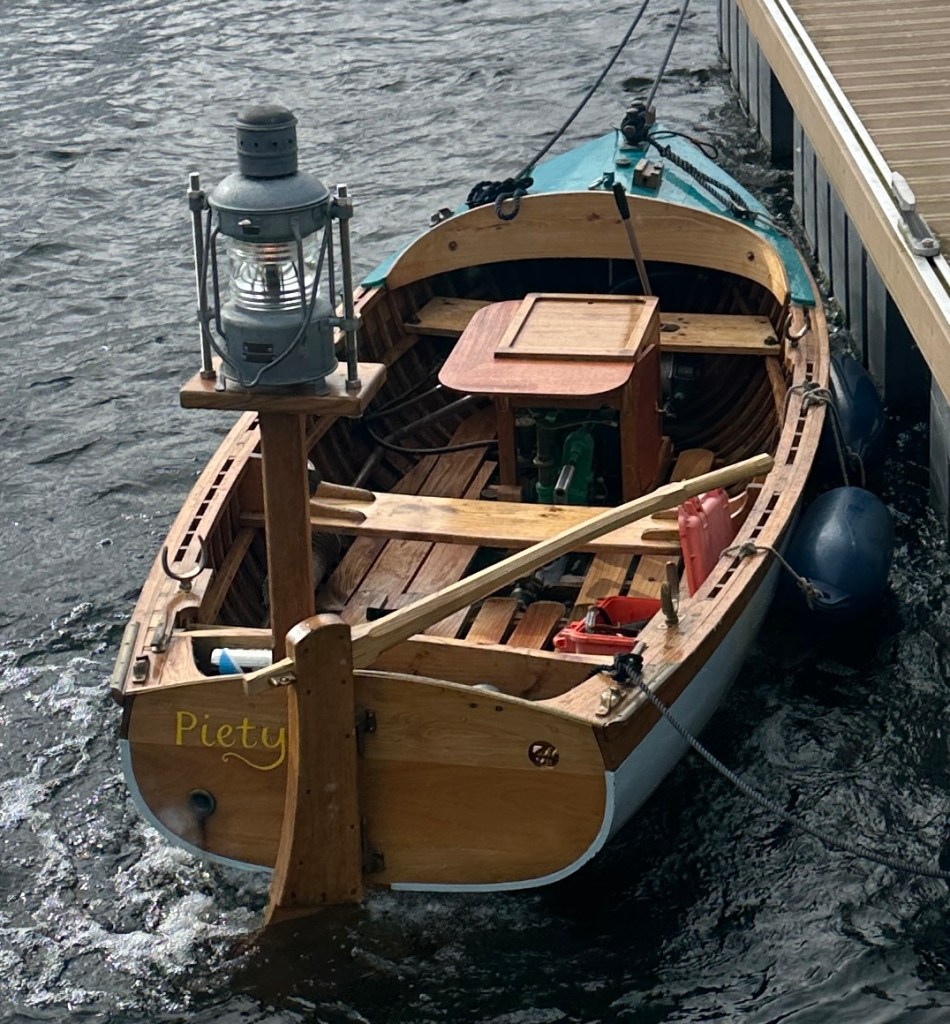
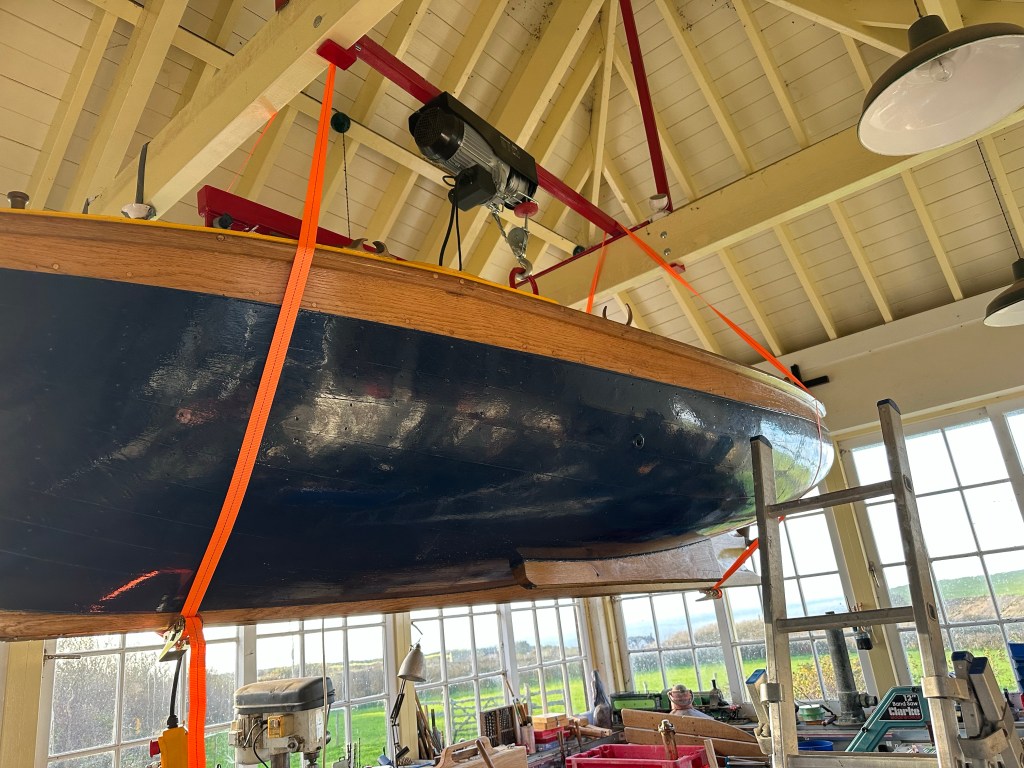
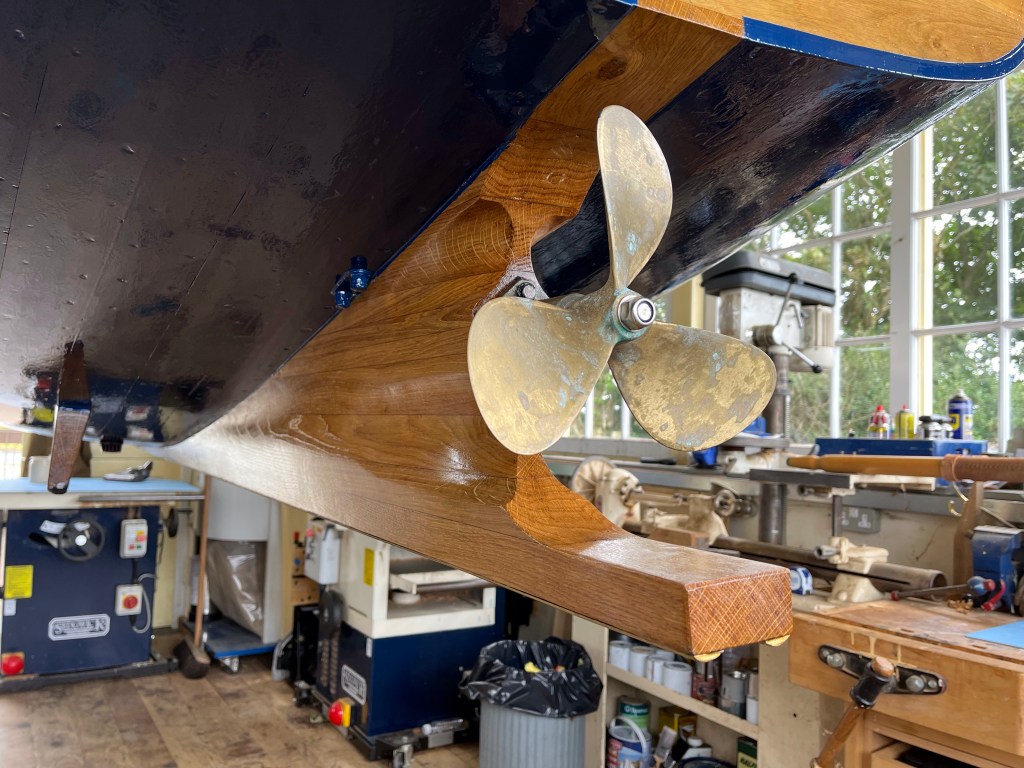
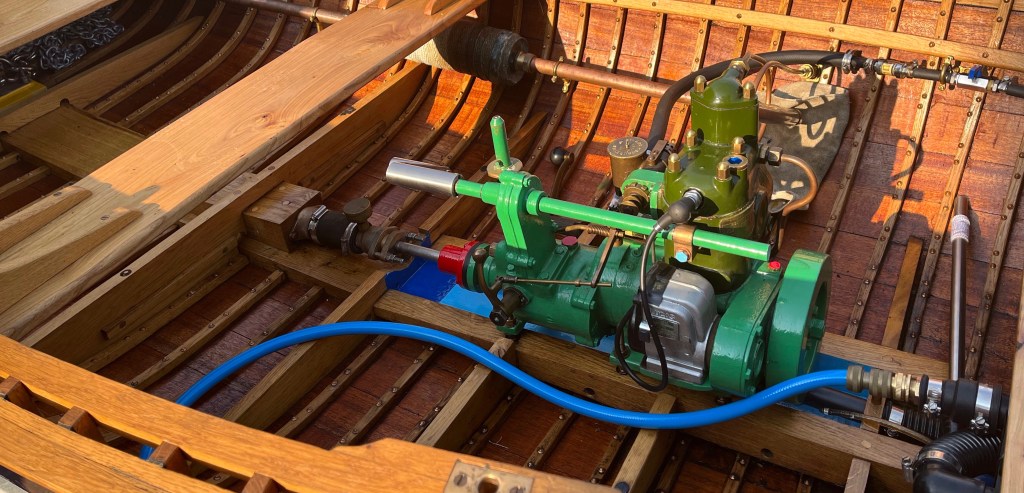
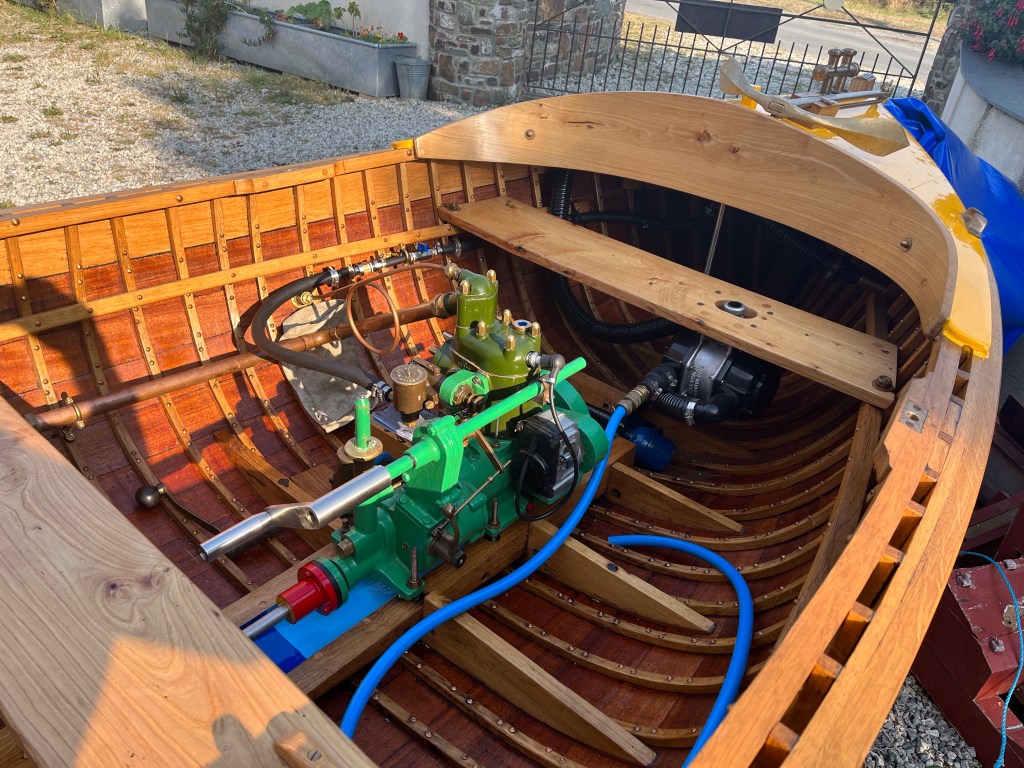
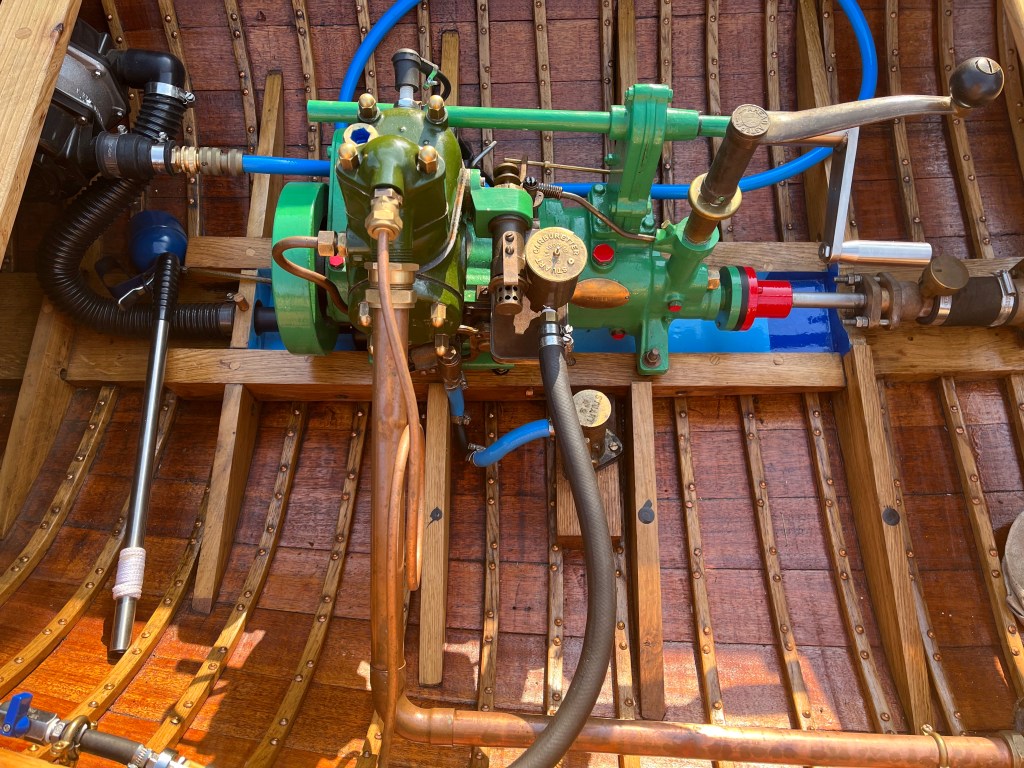
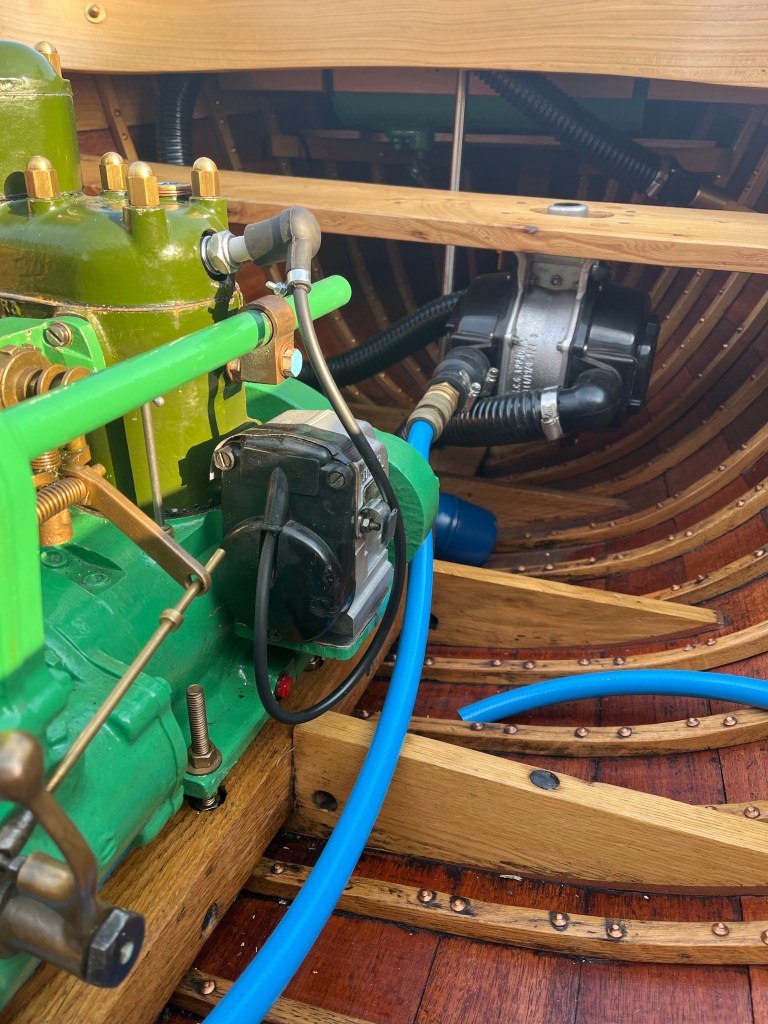
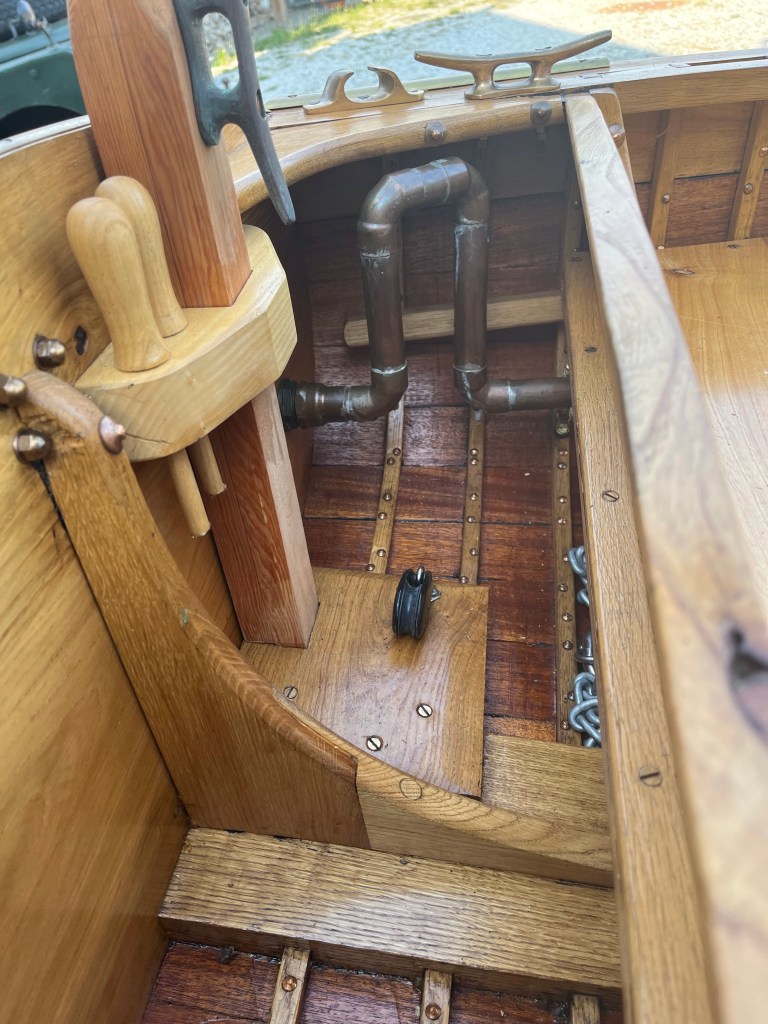
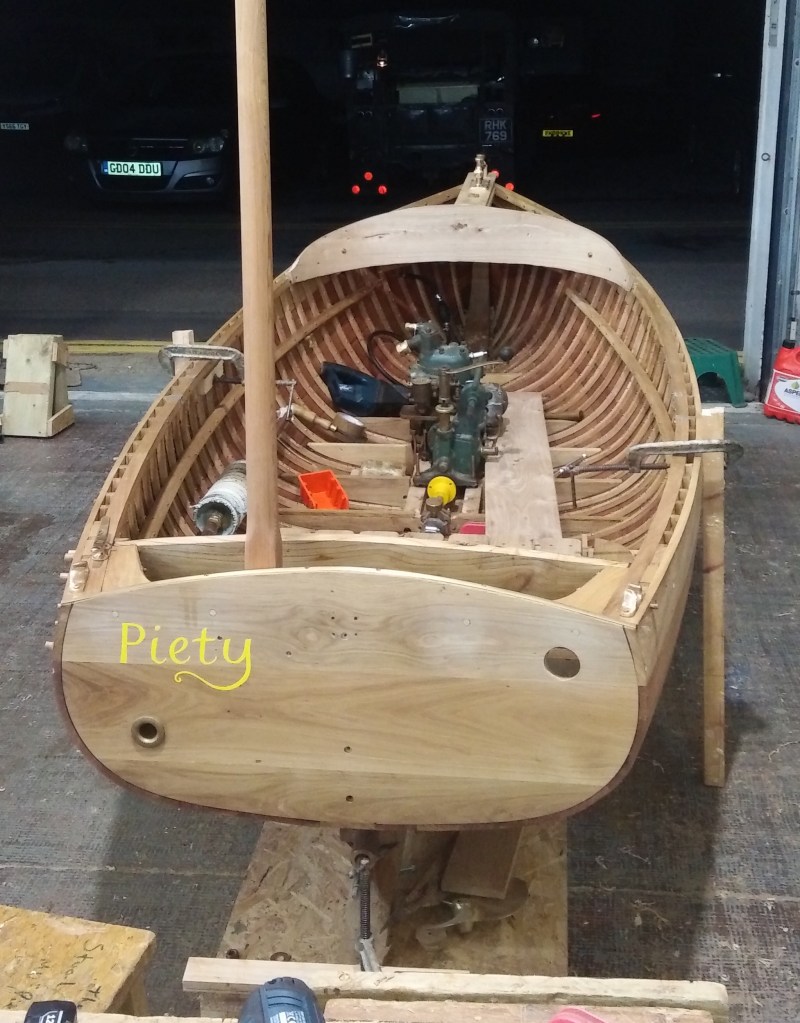
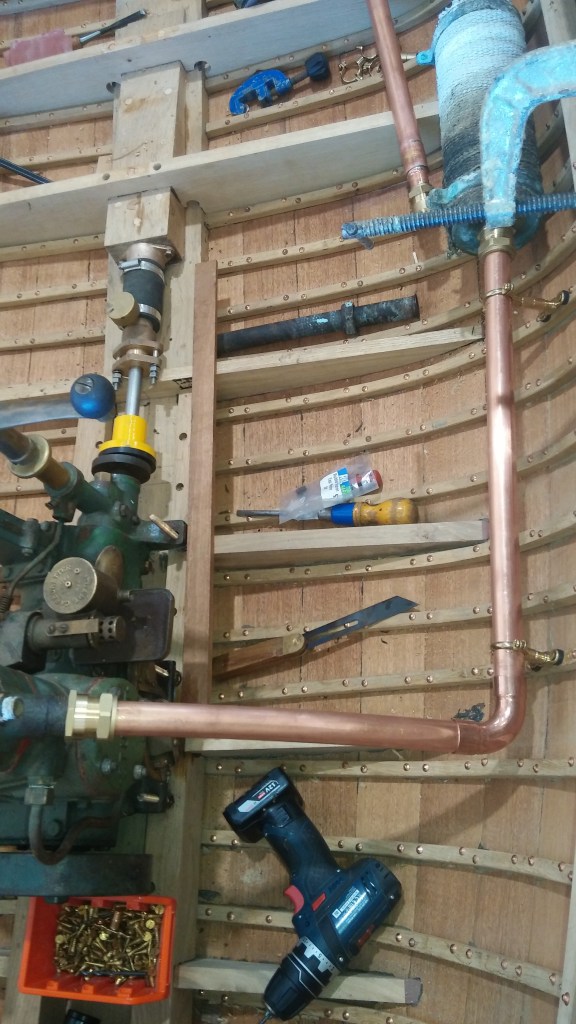
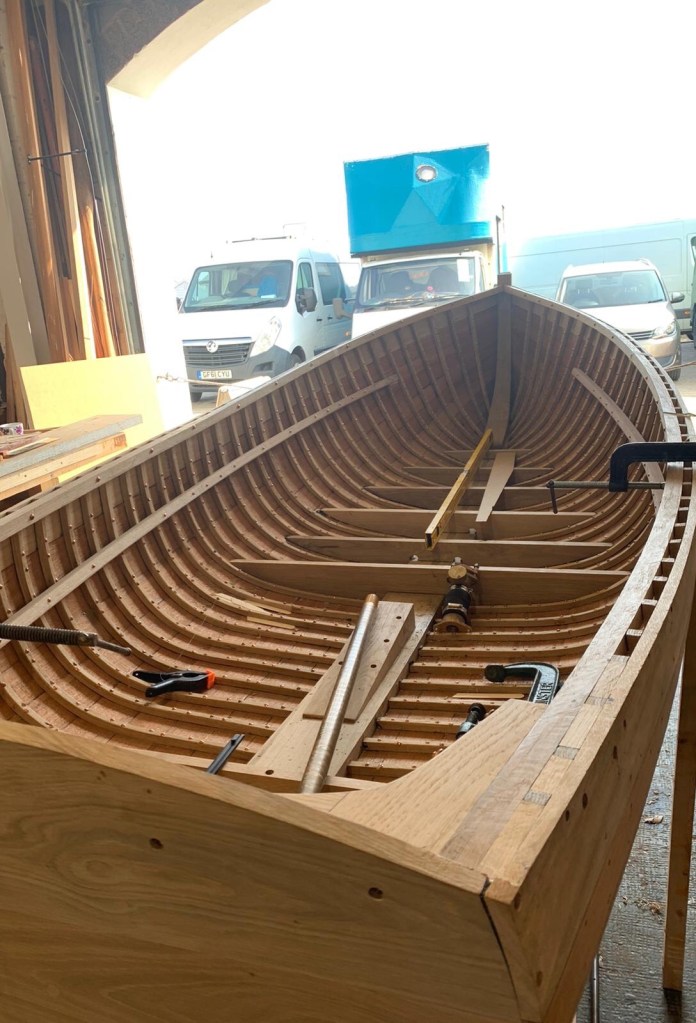
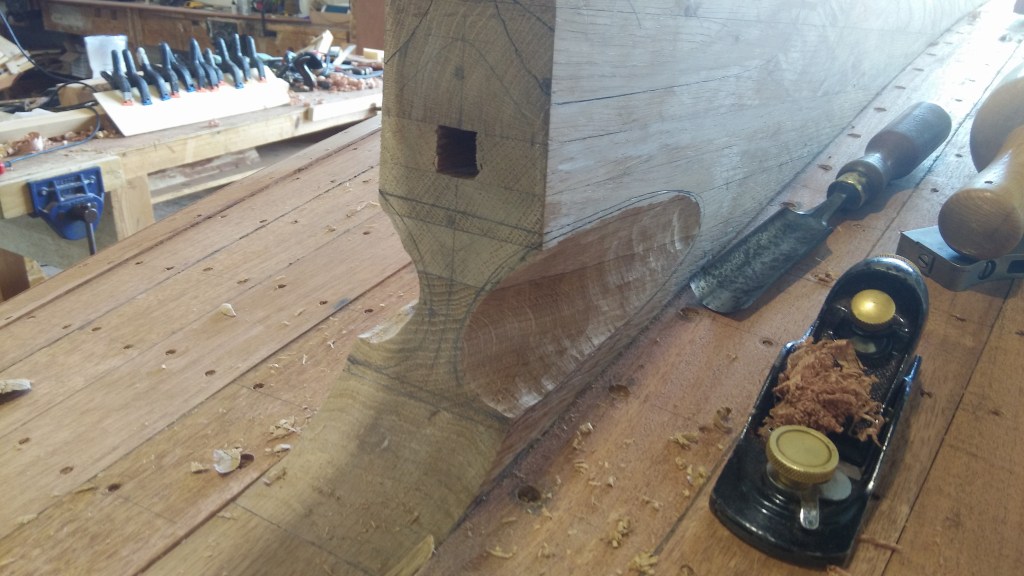
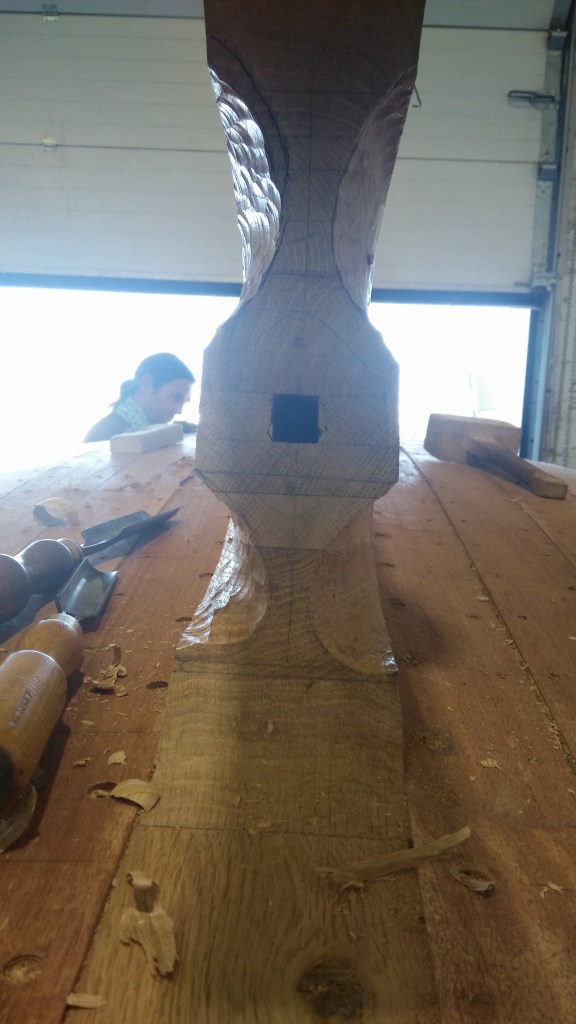
Second launchHoisting her up to have full access to the hull has allowed for completion of sealing, enamel and D3 oiling. It’s nice to see the bowl above the propellor to ease water flow to it. I had to learn to use the hand chisels with my left hand to scoop or scallop the port side out.Although I have stripped and rebuilt the engine I made several mistakes and Edward the professional in Bristol resolved and perfected it so it starts on a turn now. Please note the silencer which with the copper piping provides a remarkably quiet exhaust (whilst keeping the “phutt phutt!) and there is very little vibration at all.I have beefened up the fuel lines considerably to ensure ample fuel flow and worked to get the line properly gravity fed…so using rubber lines which I have anyway on the bilge pump system.The exhaust is 30mm copper tube and hose for the water inlet and a copper pipe outlet we will see how this works but on the original trial the exhaust and water were preventing overheating in the engine and along the exhaust piping – so no cladding yet.Edward from Stuart Turner Bits and Pieces sourced and fitted a proper “marine gelled” magnito. The “Whale” bilge pump is well oversize and has a main inlet under the engine, but I can use the hose pipe to dry between the frames on the hog throughout. I want to handle a wave so the engine is sealed.The Exhaust outlet at the stern has a section to prevent water back flow from the transom.
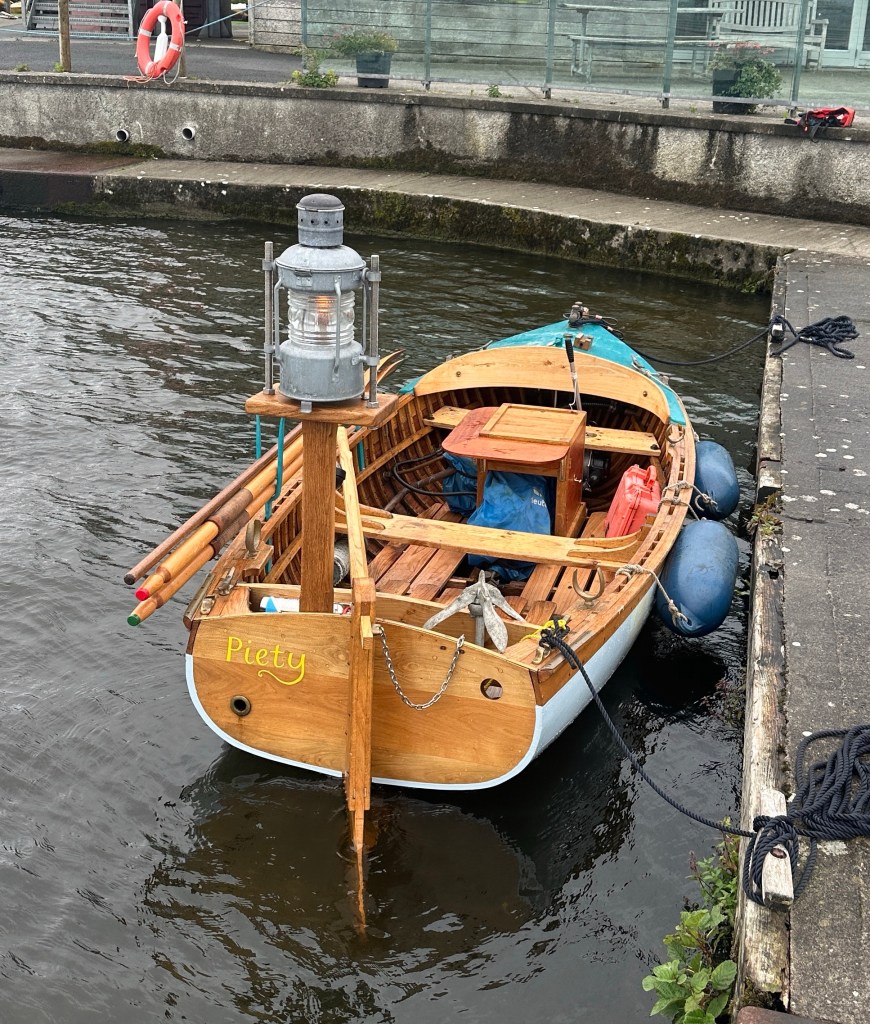
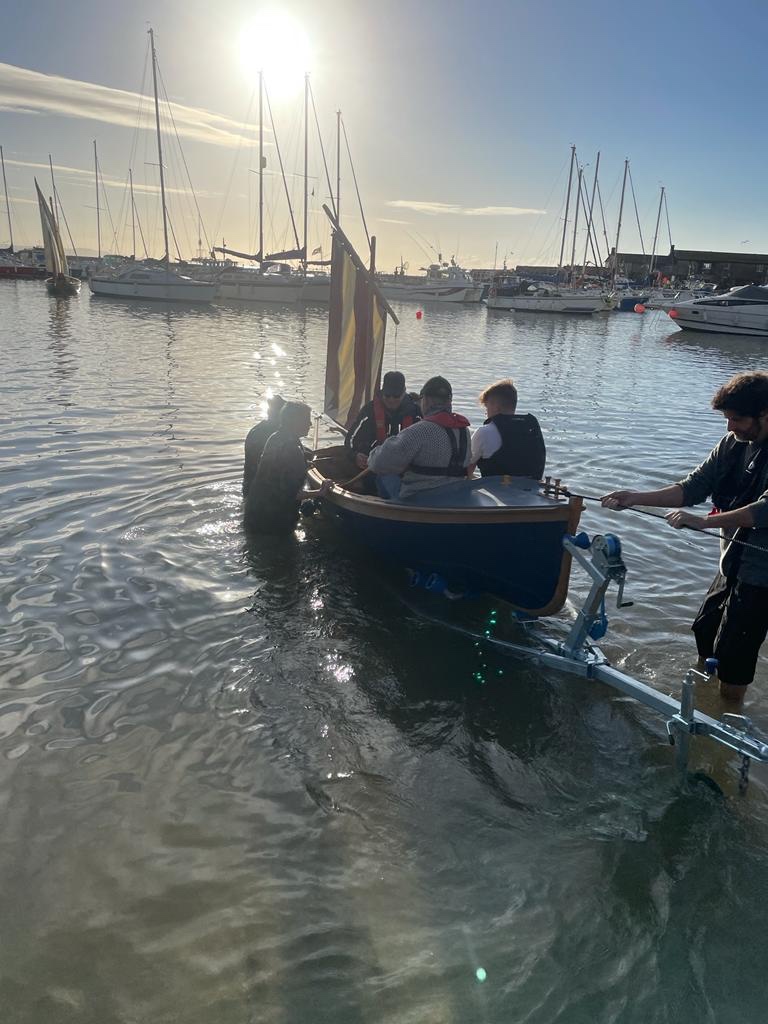
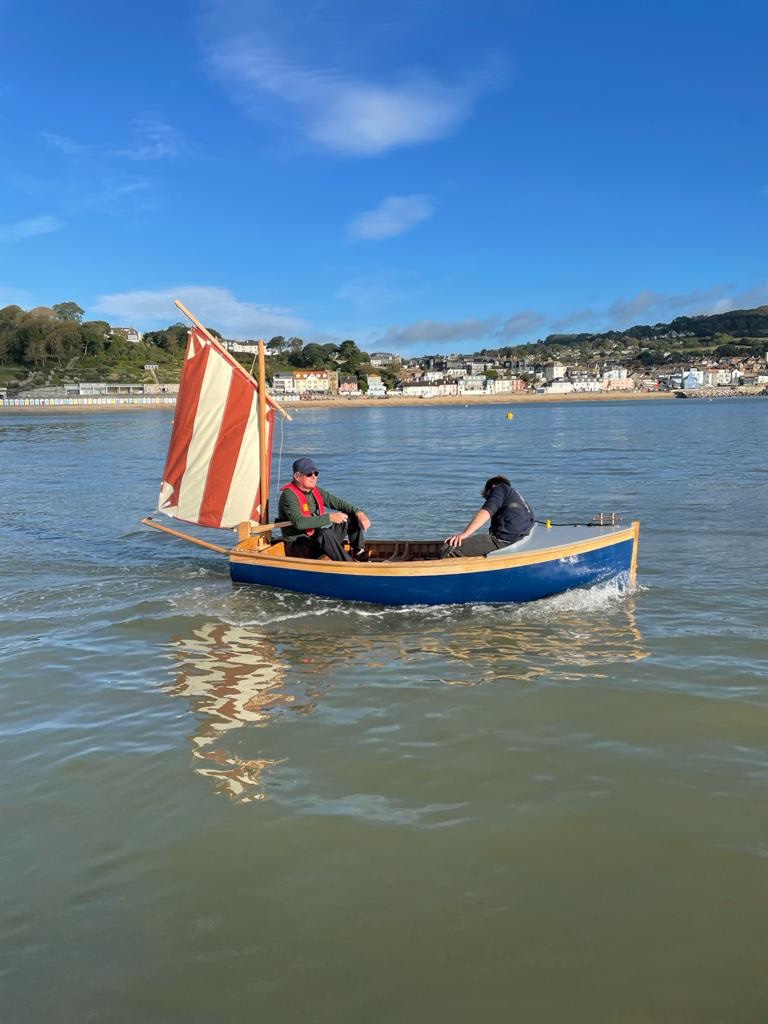
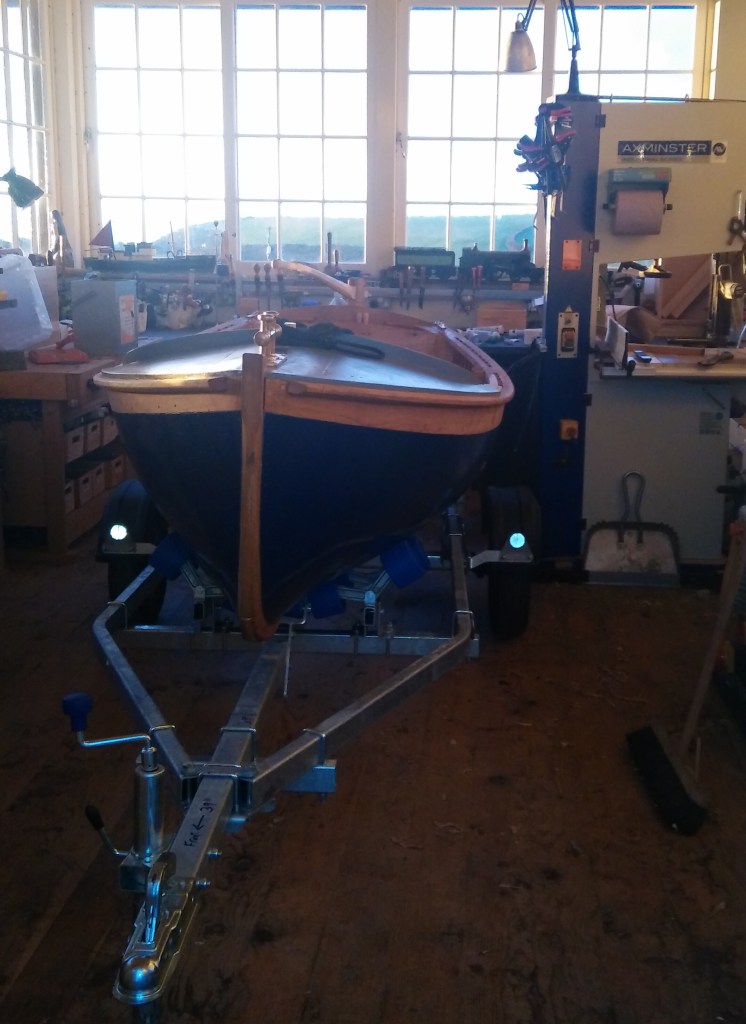
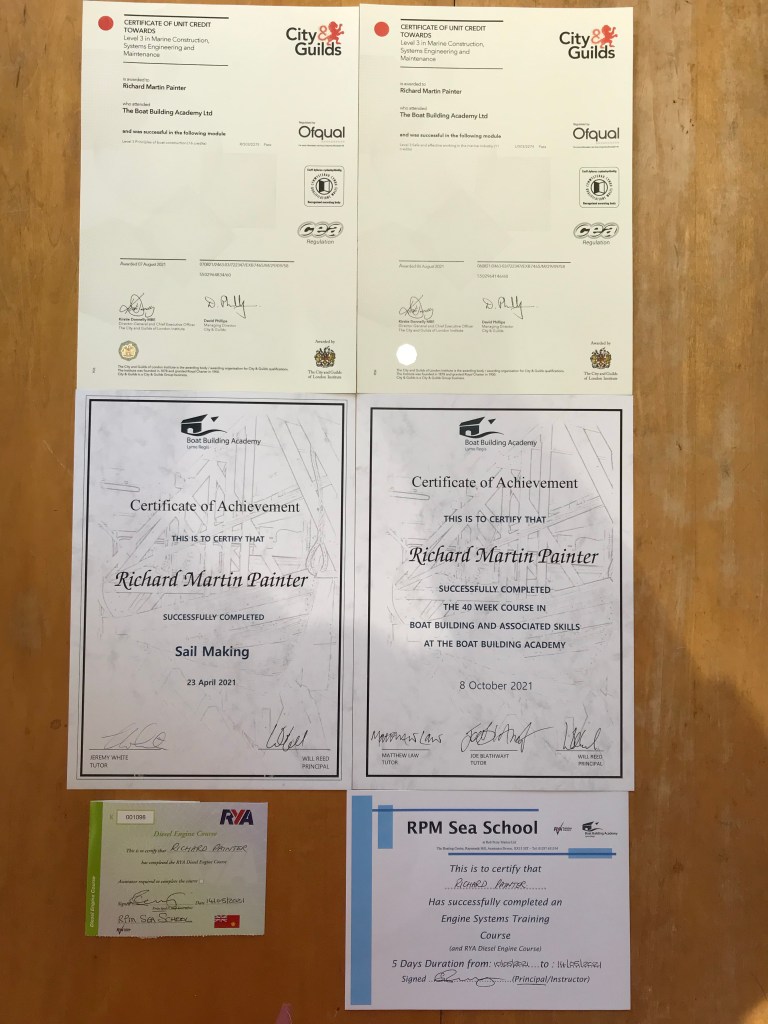
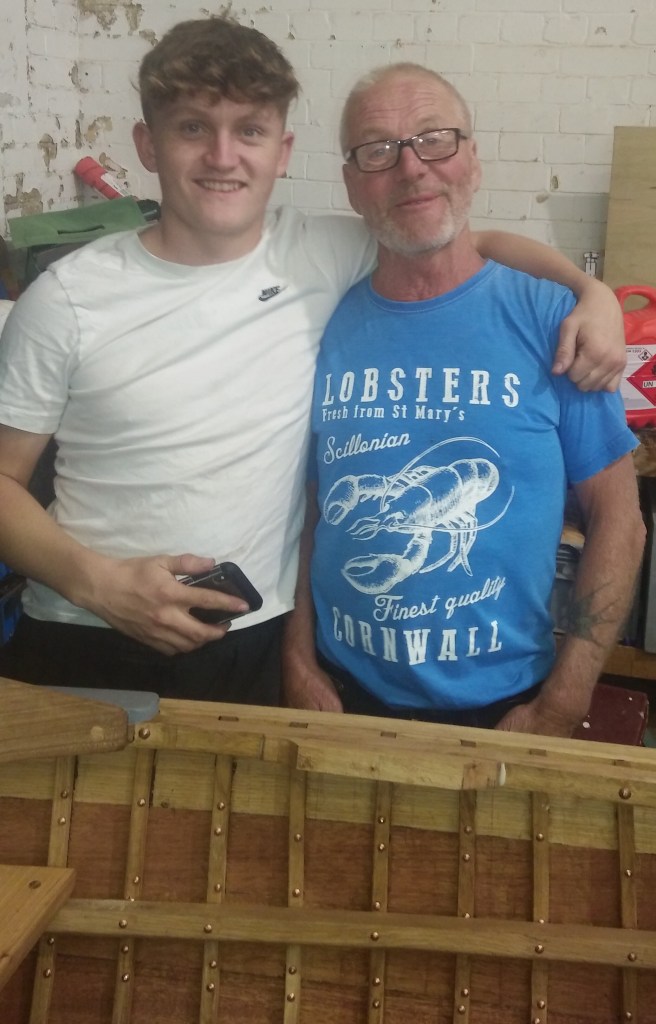
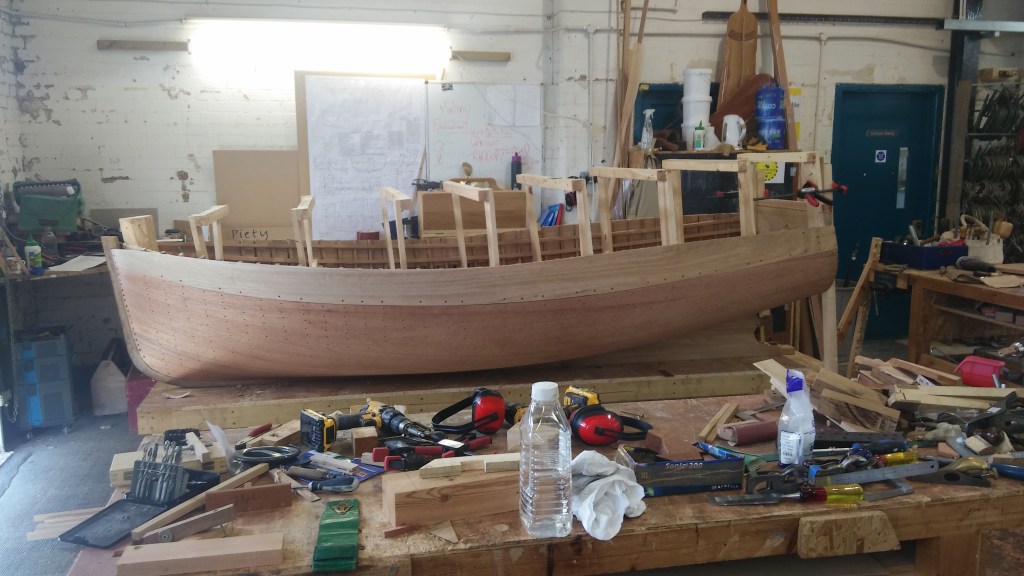
The Launch….a truly beautiful boatDoing 5.5knots..the steading sail was a useful learning exercise and in theory holds the boat to the wind when fishing etc.She’s back at home now in the workshop….about 85% complete – just the really nice bits to do now.Got some certificates!!Jack and Ralph Handy – Father and Son
They are from the Isles of Scilly and Jack worked extensively on Piety particularly in the last 3 months along with John Griffiths- a great team and thank you. Ralph came along just before the launch thinking about a beer but he really helped us to complete.
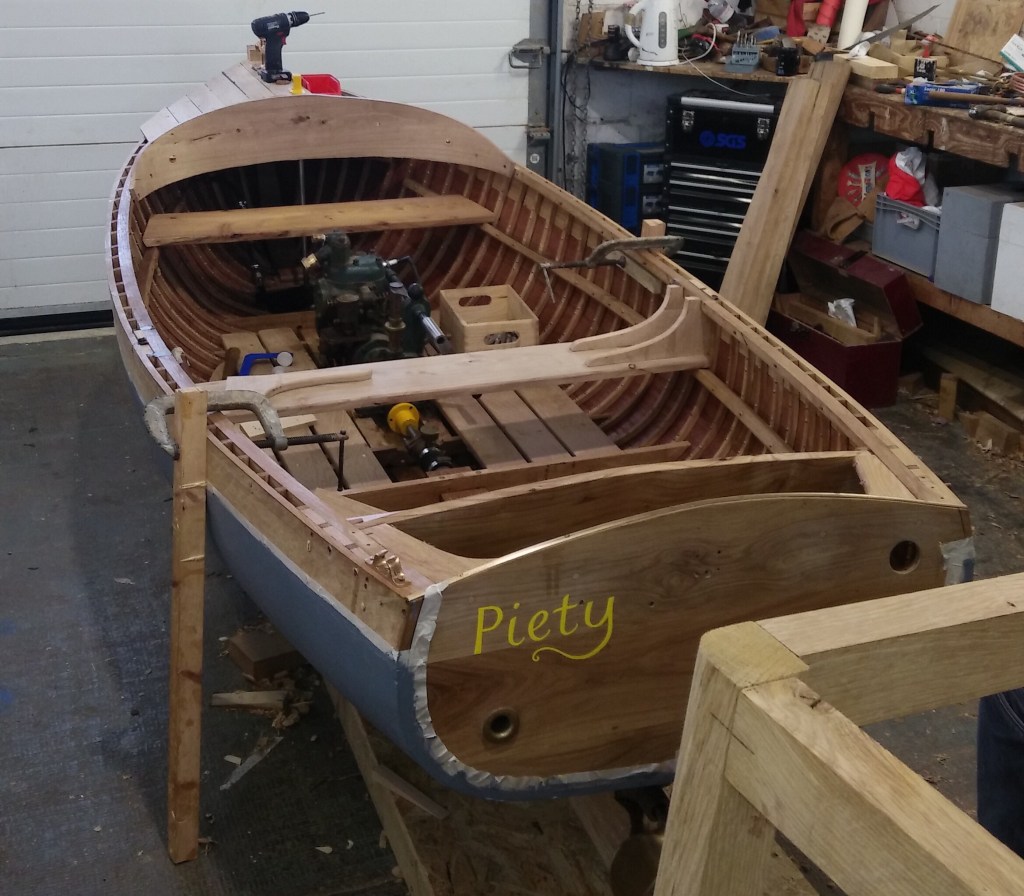
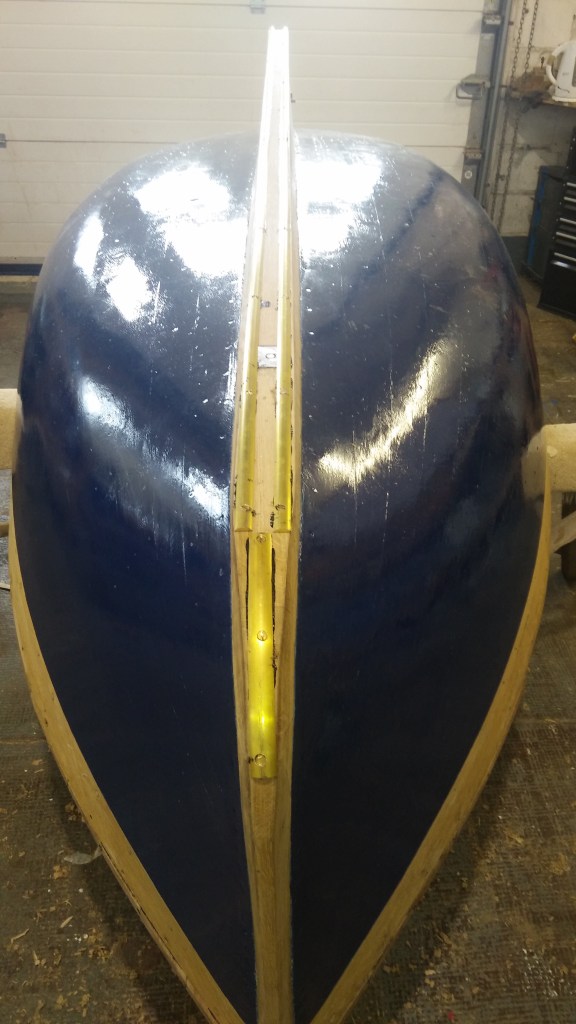
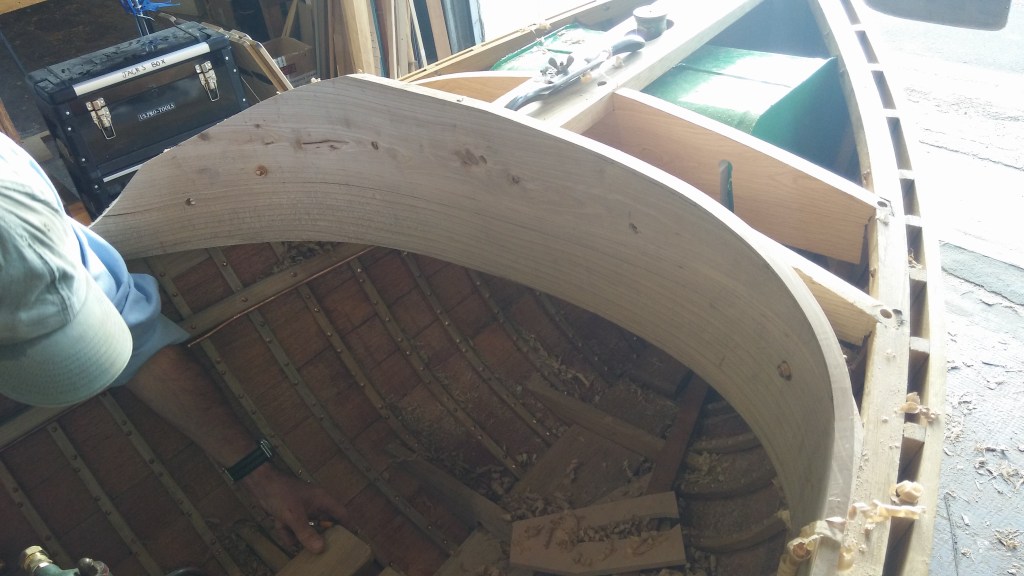
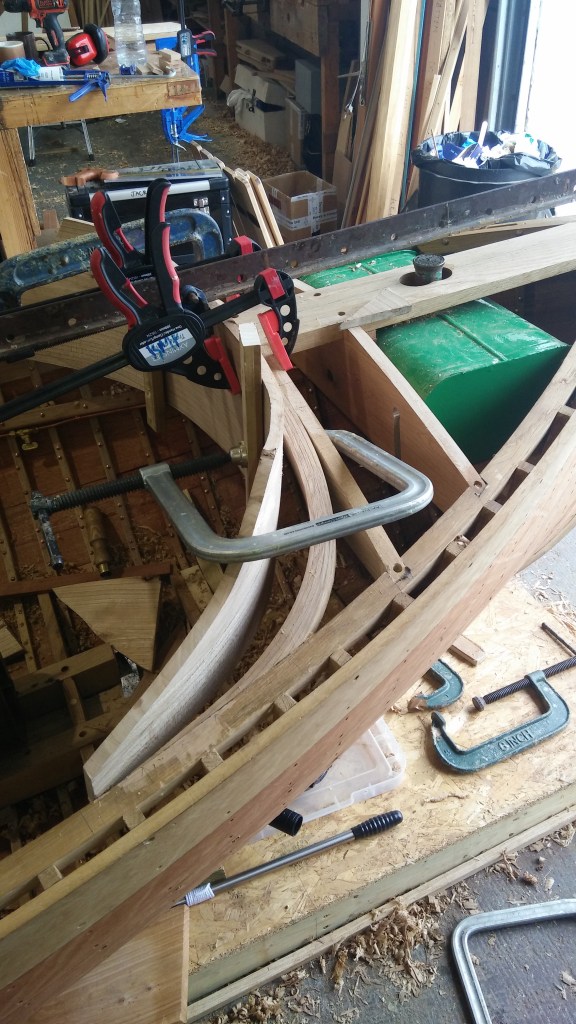
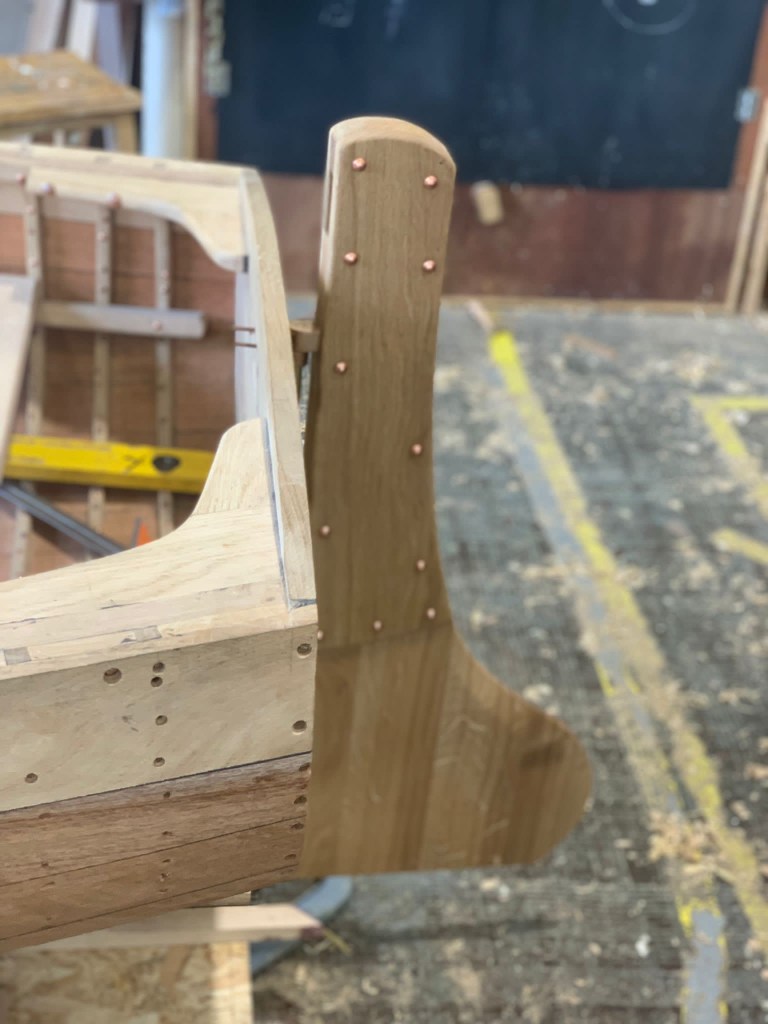
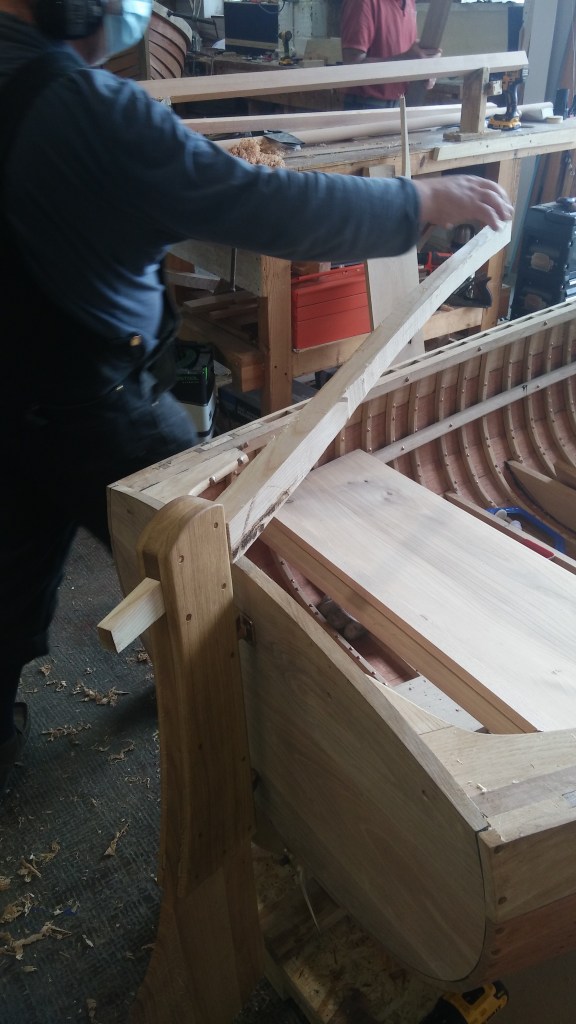
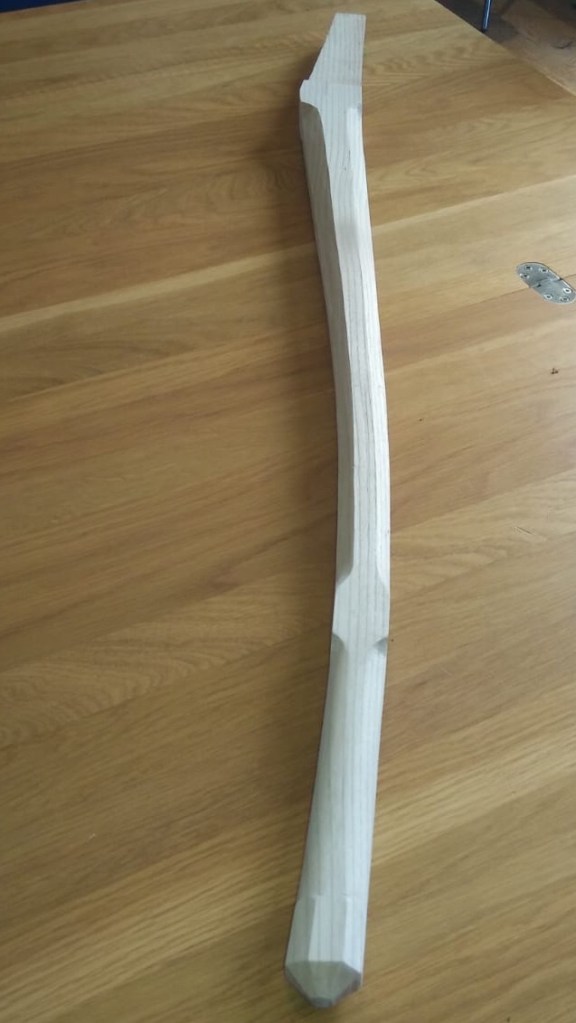
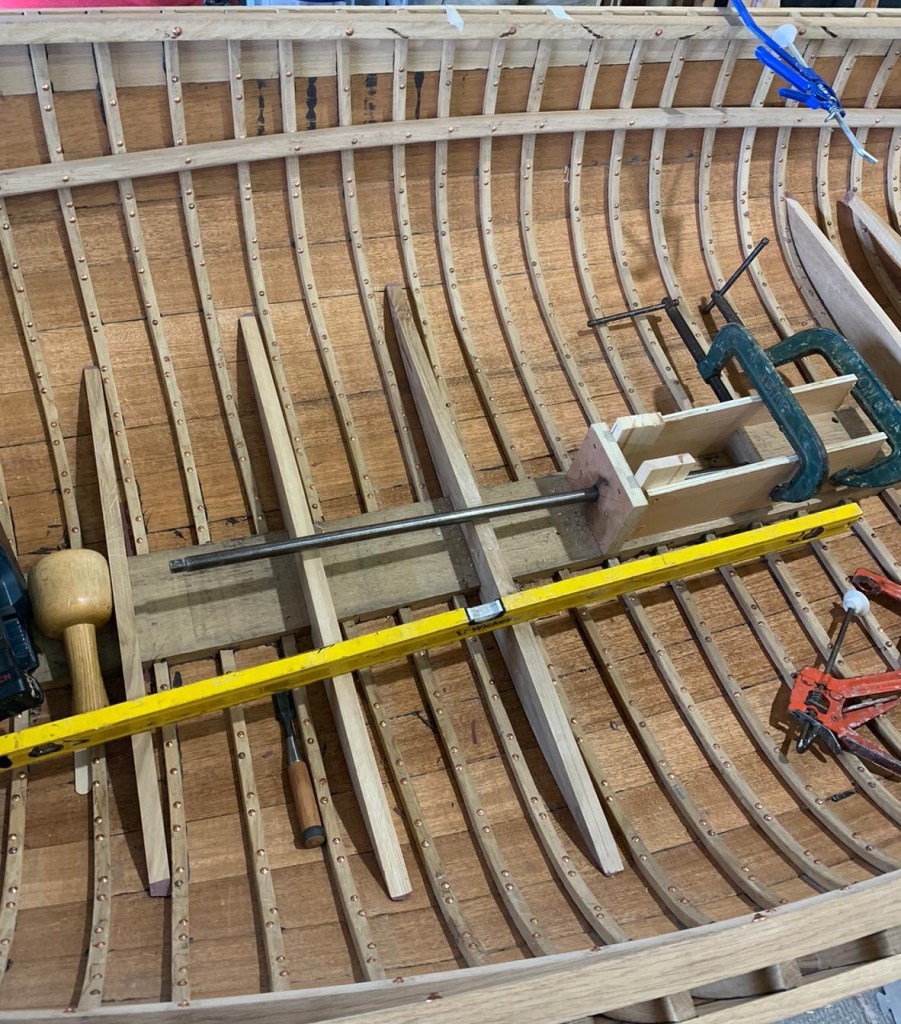
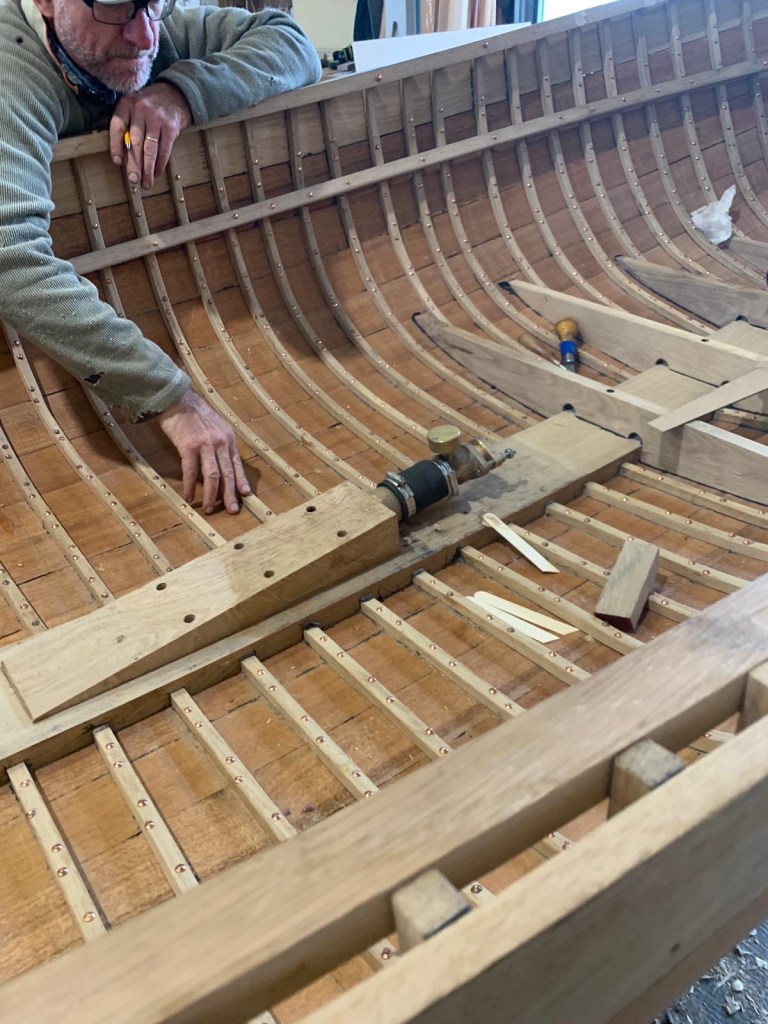
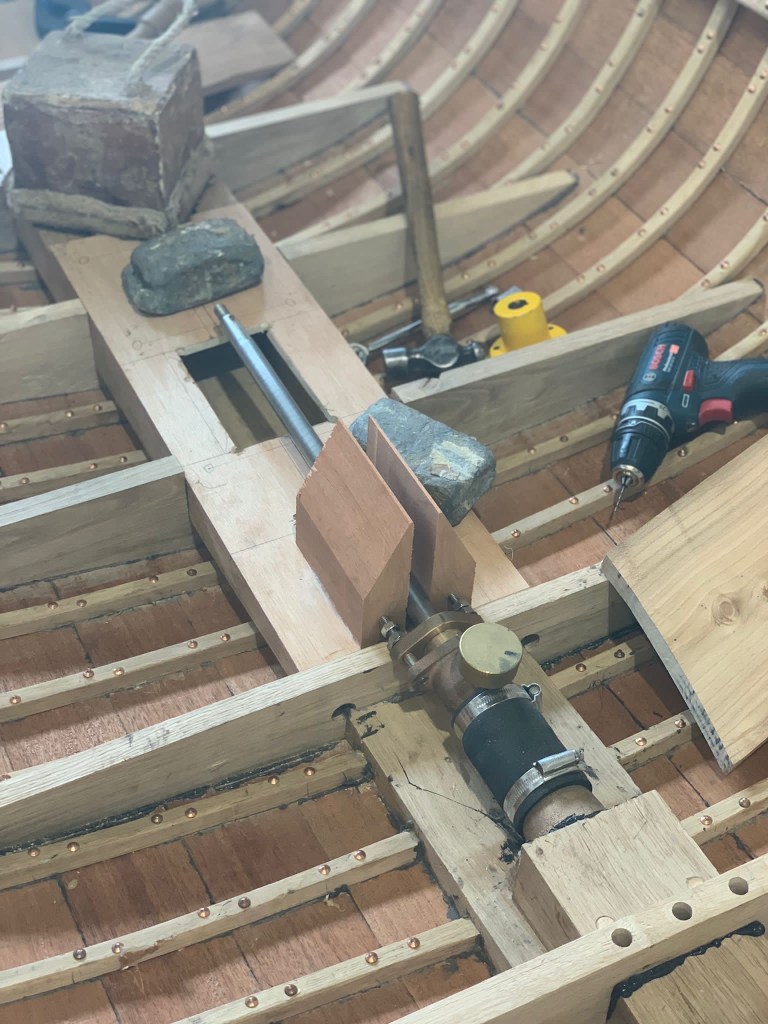
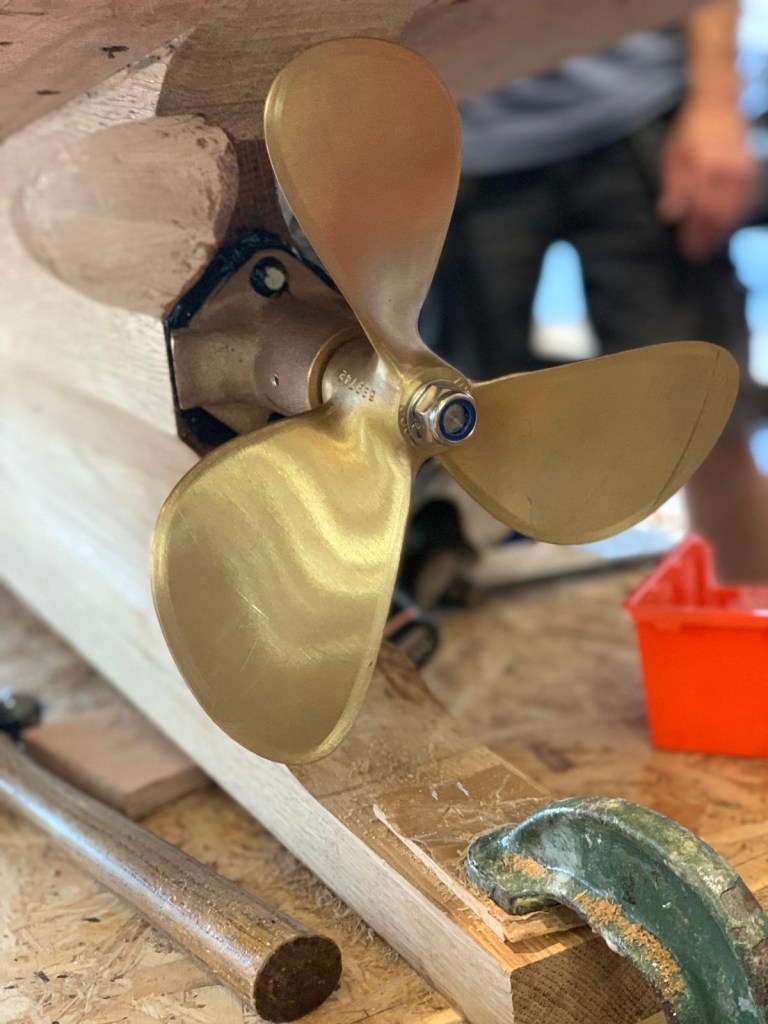
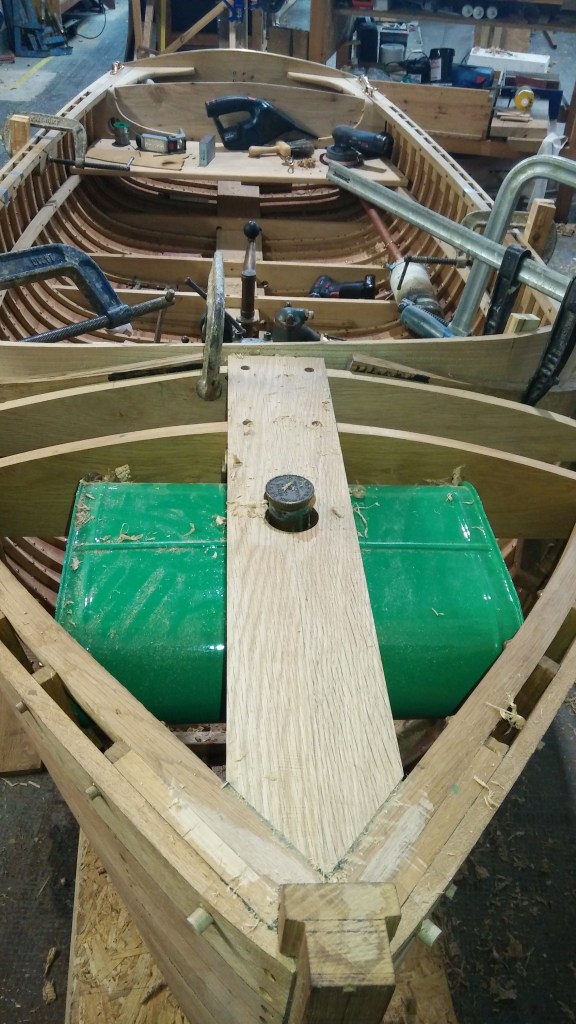
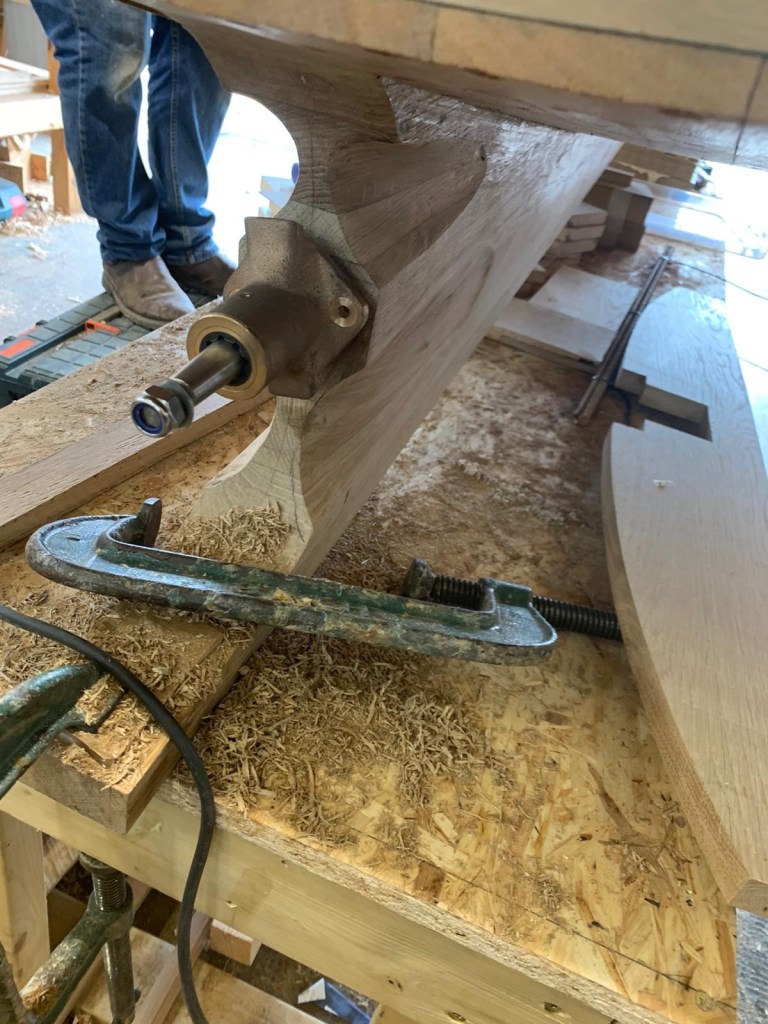
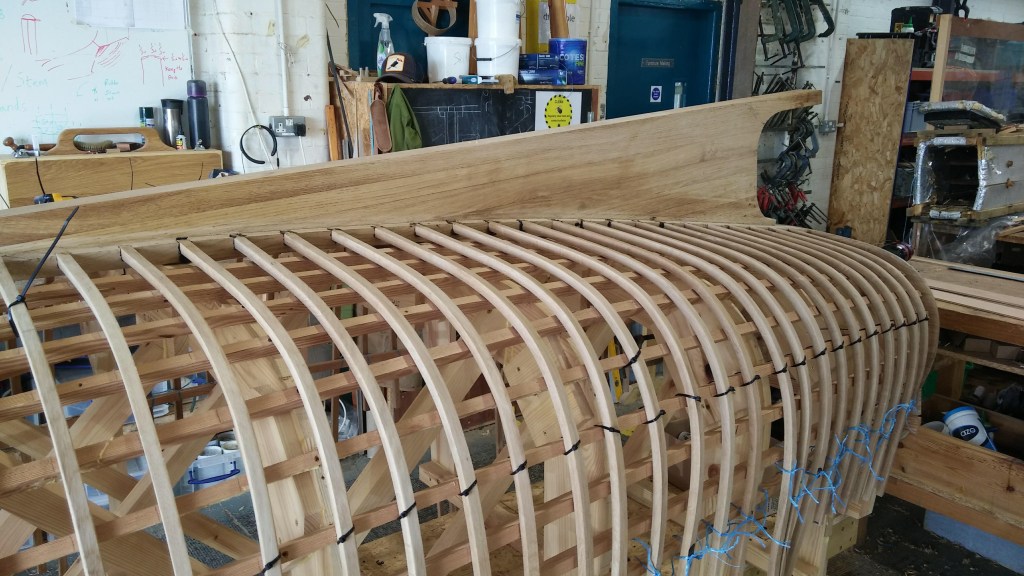
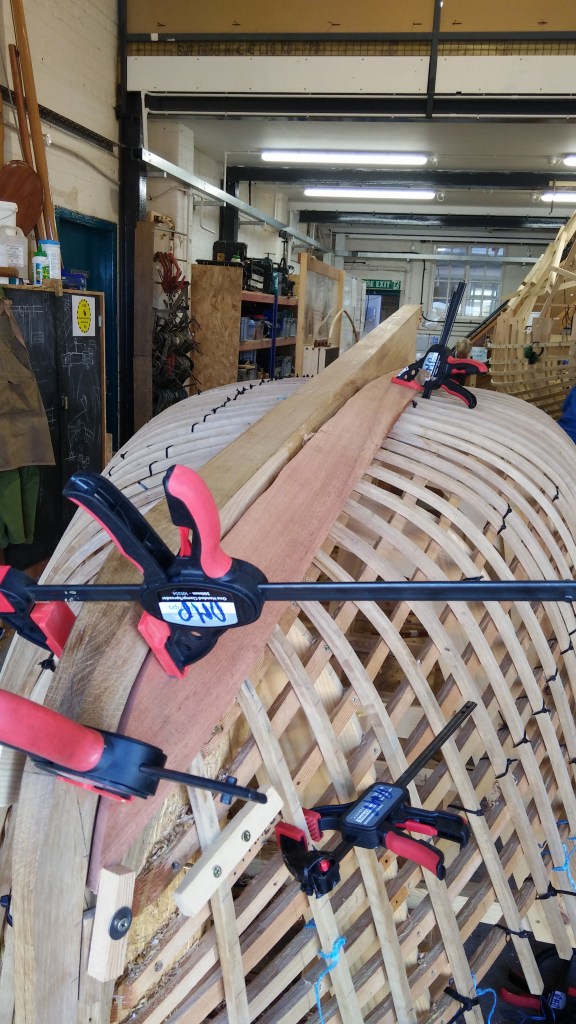
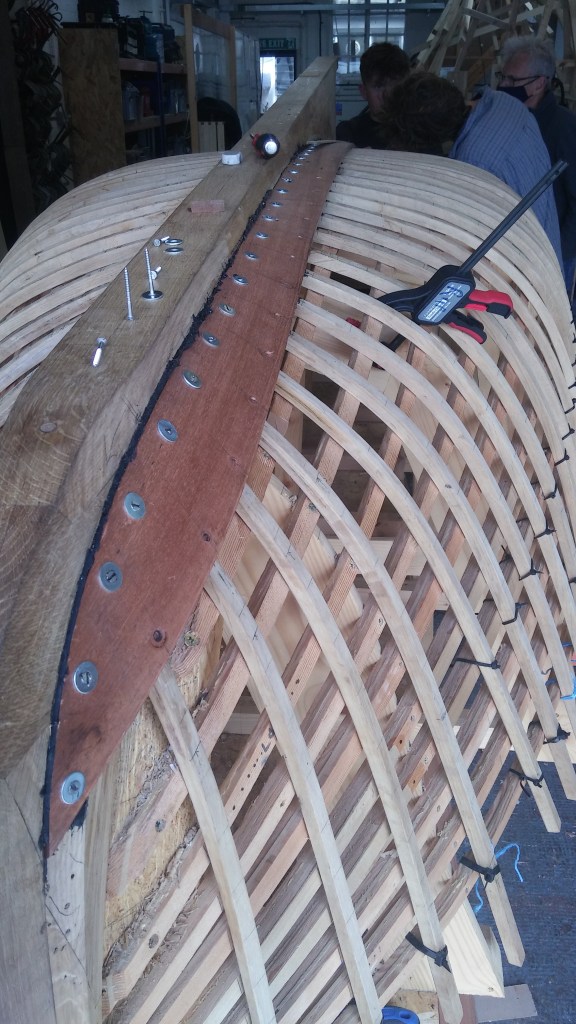
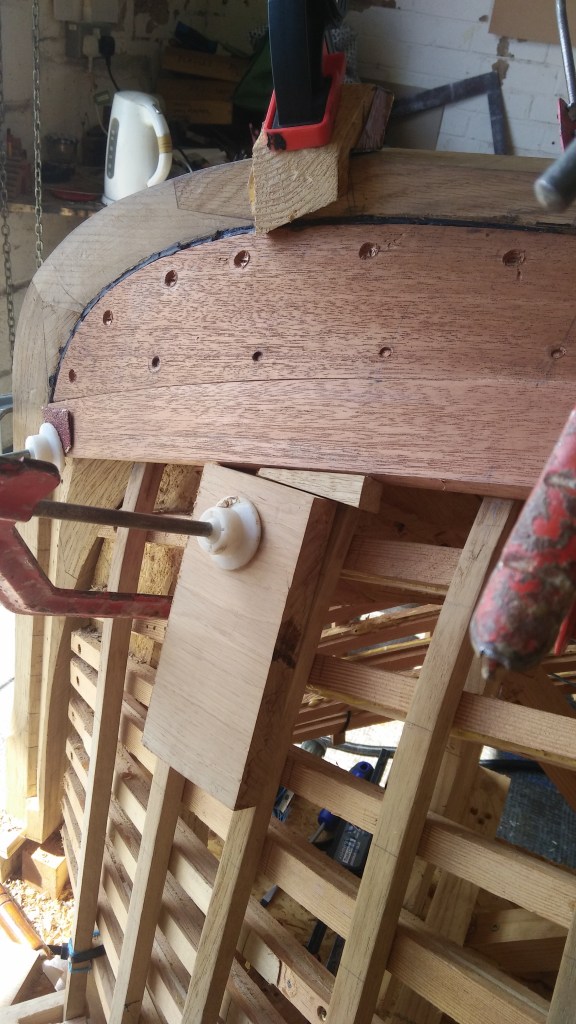
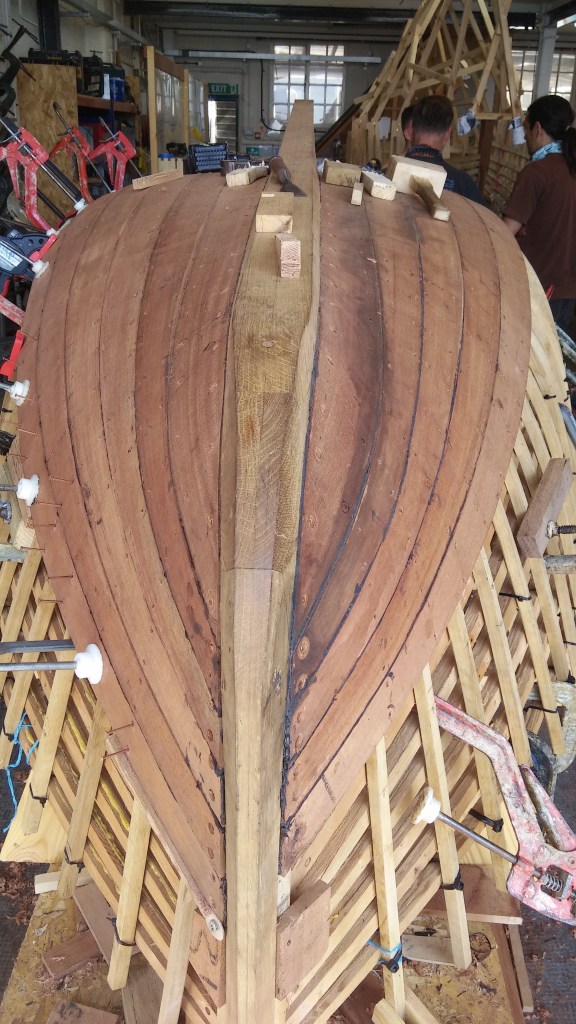
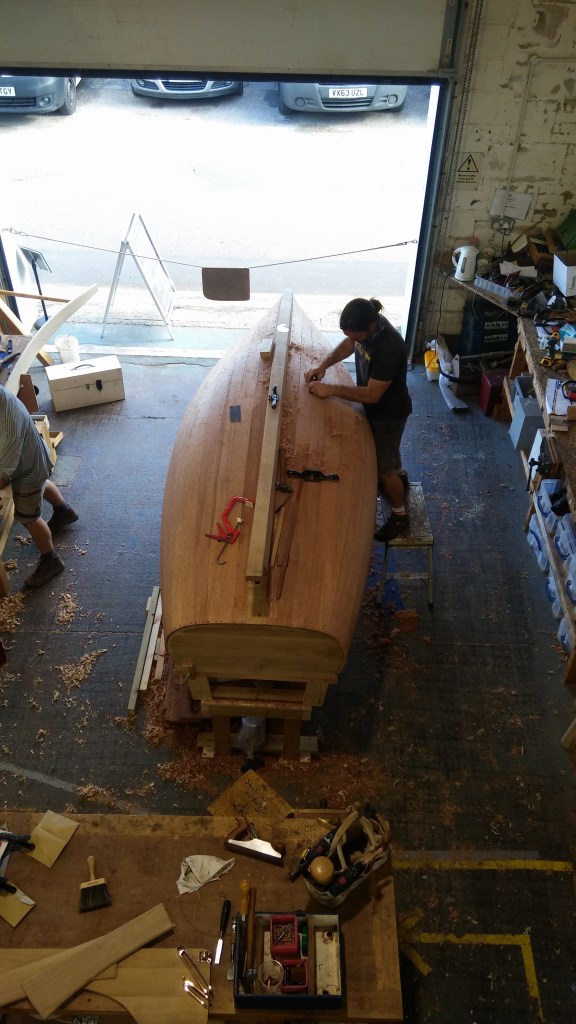
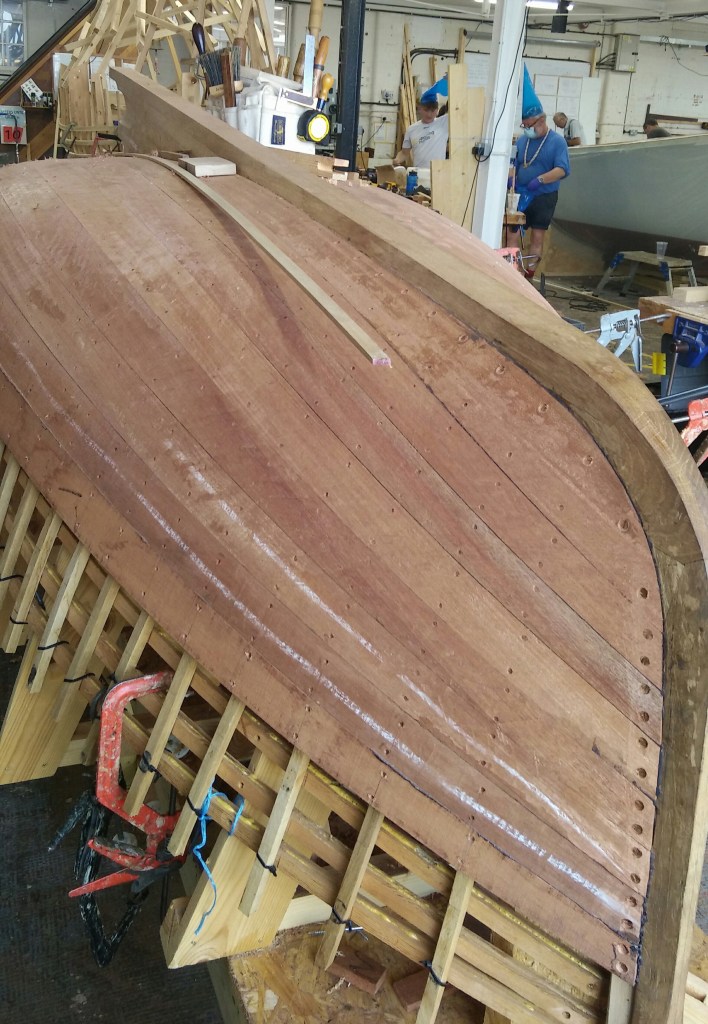
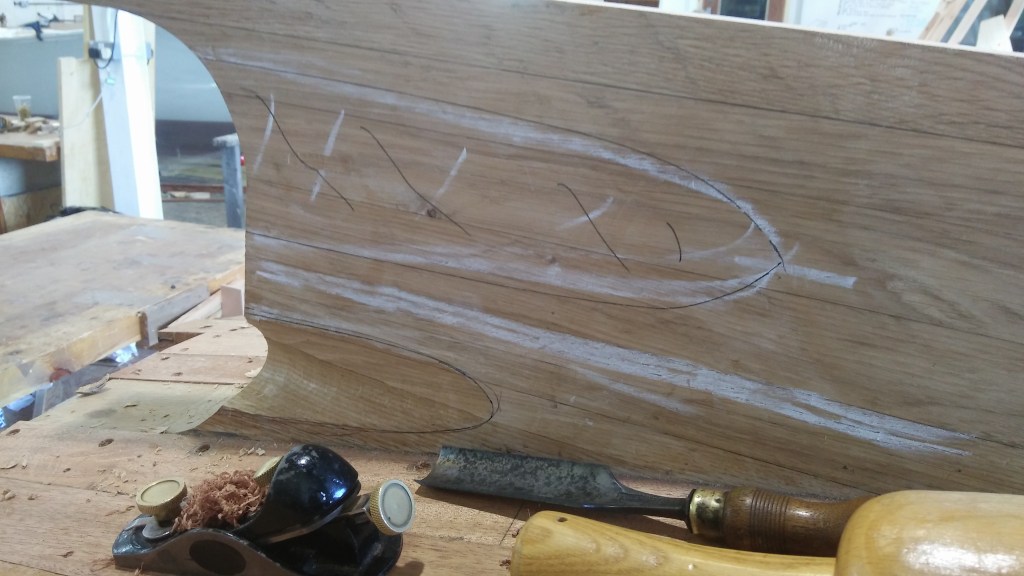
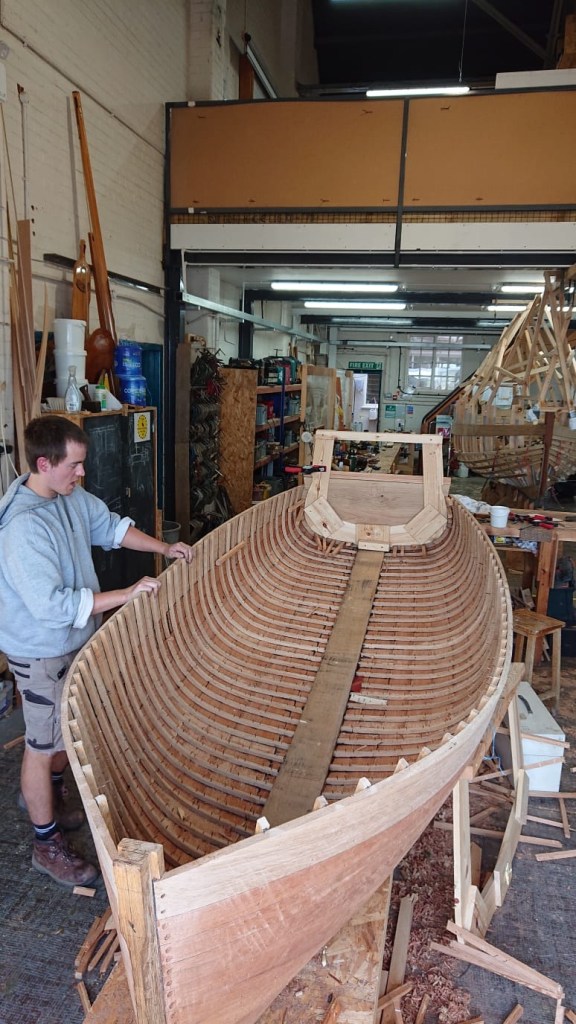
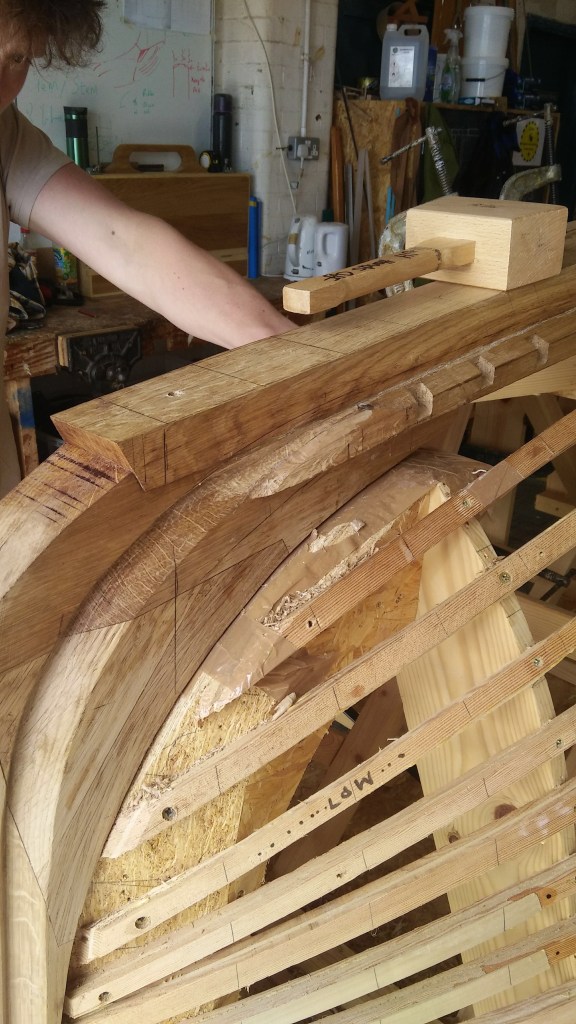
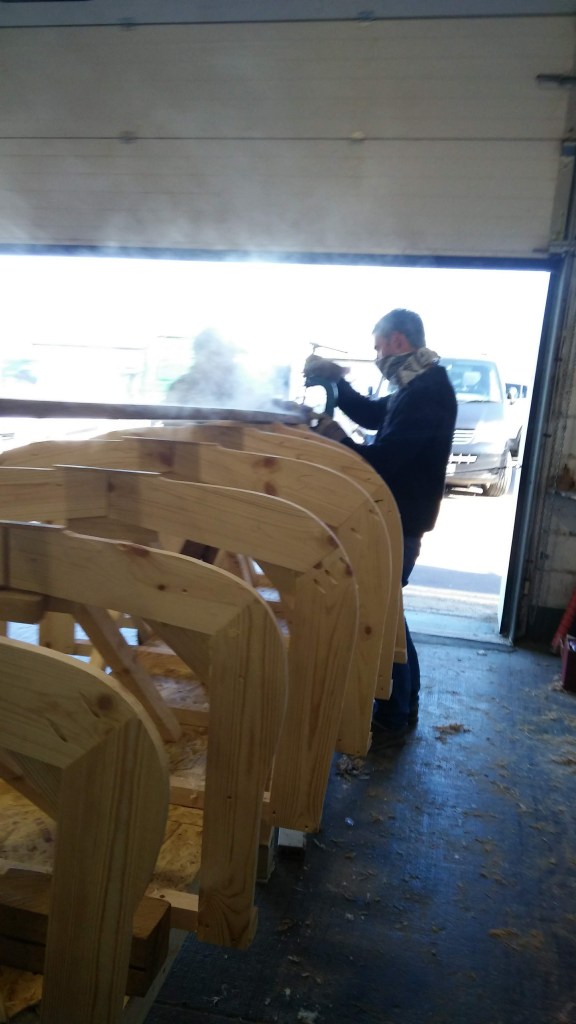
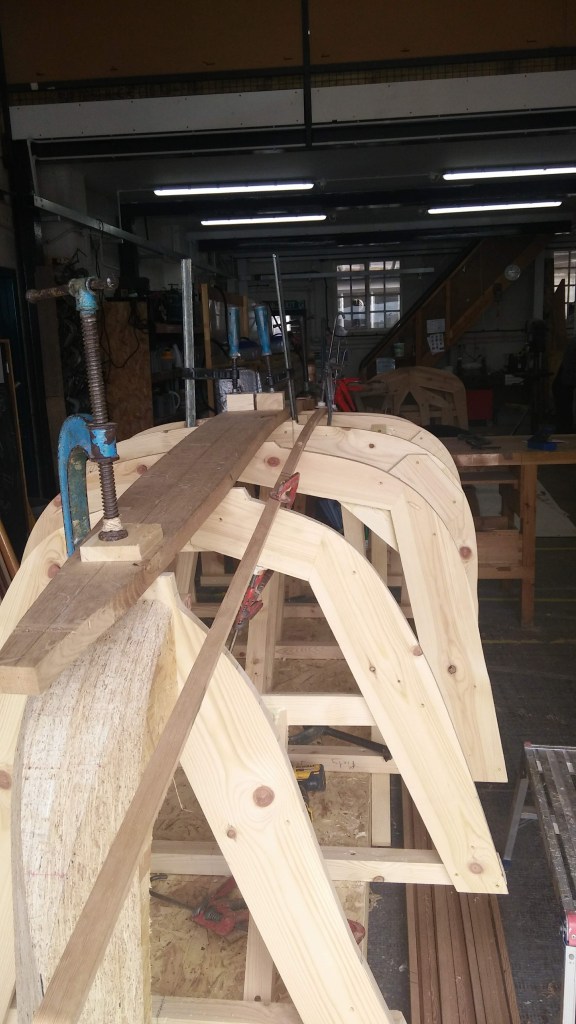
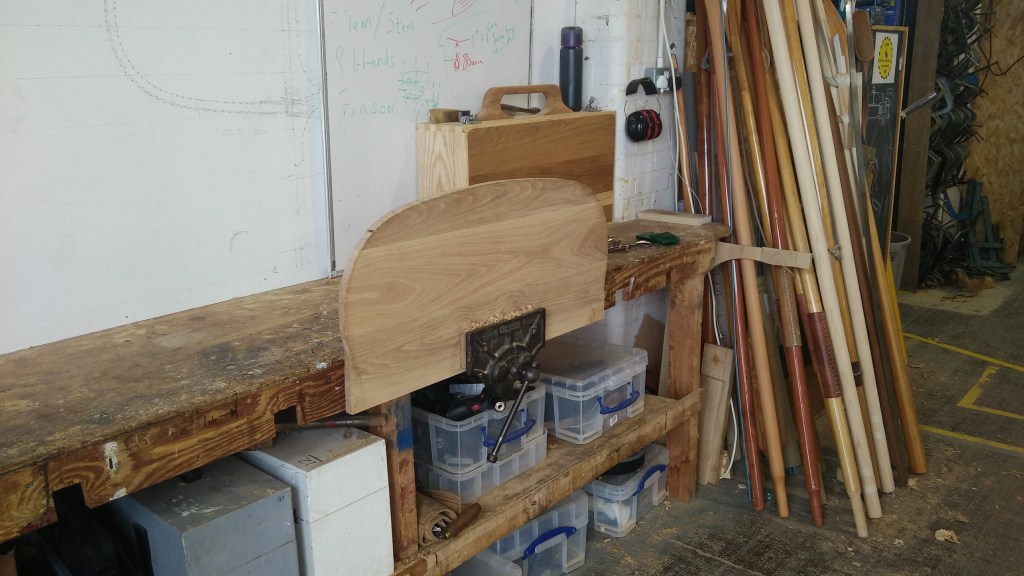
Under tremendous pressure to complete now on the launching date..”Leafy” Dumas kindly painted the name.Turned her back over for painting….the brass wear strips will be necessary on the local beaches. Bilge Keels also were added.Setting in the engine and drive train involved opening up the mounting holes by 5mm and then getting really straight. The silencer and exhaust systemwere fitted using copper pipe etc.That took a lot of clamping in and large areas split fortunately on the outer ends which were cut off. Once in position it was fastened with screws plus two through bolts in the corners. I am not sure if they are necessary but if the boat is exposed to hard sun light or variable temperatures then they’ll work.The Coaming is local English Elm. The frame is laminated oak and the coaming is steamed heavily as it tightens onto the frame…another inch or so to go.Rudder ready for fixingThe tiller follows the same principle for oar making…8 sided mainly but with a rounded handle.First fit.The drilling rig and cutter set up for the stern tube boring…Drilling of the stern tube for the prop shaft involved a 2m long drill held with bearings at either end allowing a cutting bar to bore the hole.We then set up a jig to get the engine mounting holes accurately alignedAnd there’s the propellor fitting neatly within the scalloped keel..And there’s the petrol tank!Once the engine is on its beds then the piping work startsThere it is! We now need to fix the engine…..more next month The knees, floors, stringers and inwhale add massive strength now. You can also see the little copper roves riveted to each nail. Will have to tidy up the back of the transom and make the rudder…38 Steamed “FRAMES” from English Oak now in position for plankingThe material for the planks is a West African Mahogany called Khia, as Oak is too unstable under water. The template is for the first plank on the keel called the Garboard…So that is the first rough cut of the garboard….these two planks are the most important to get right.Initially we set it in using washers and stainless screws..And then bronze screwes, nails and mastic Each plank is steamed in using a wallpaper stripper steamer linked to a plastic tube over the end of the plank.There we go…. There is a line of mastic between the planks as caulking/seal and they are screwed for and aft then copper nailed on all the interim frames.Then all the planks are scuffed off..rudder on the bench!As you scuff off you are looking at rounding/fairing the plank edge and not the centre, hence the chalk line down the centre.Now, this is a scallop to allow water to flow into the propellor fully.My Grandad “Charles Stanley Reed” was a great wood sculptor and would have enjoyed this work with gouge chisels.The top plank or Sheerstrake is Oak and we turned her over to start work on the insides.
There we are…… more to do next month
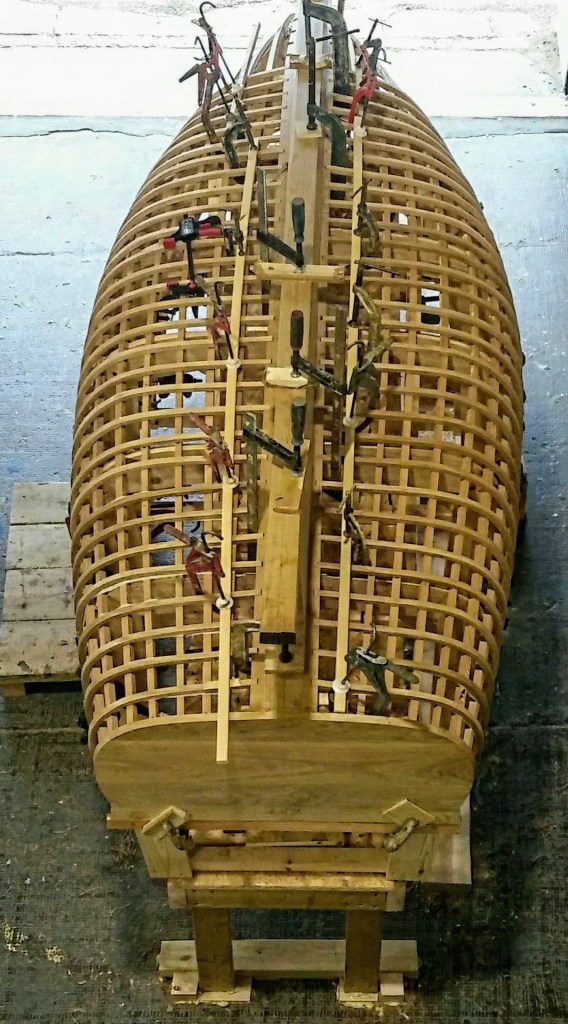
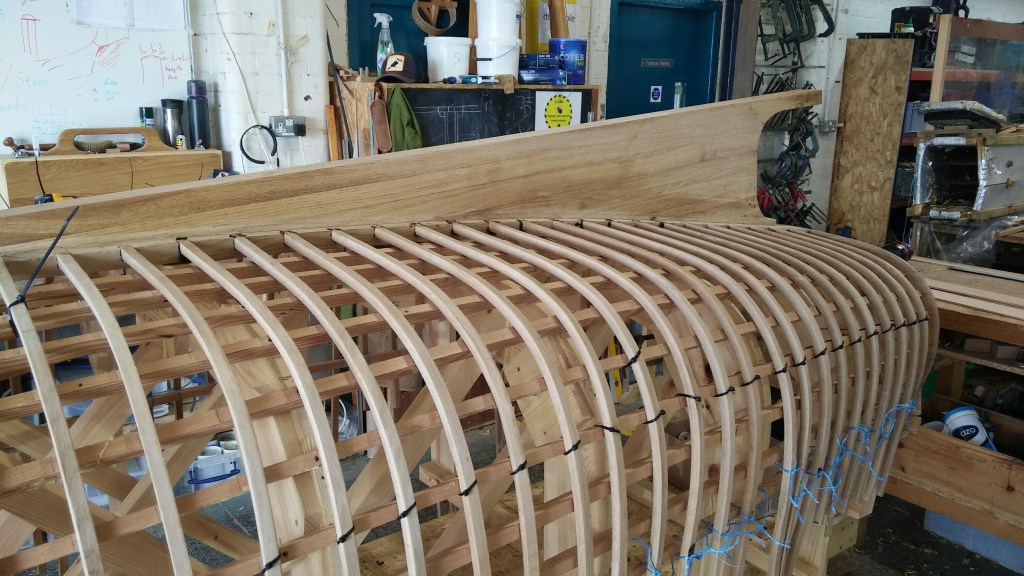
We are moving onto the ribbands which provide a frame for the “frames” and .. the keel, hog and stem are fitted and then cutting the rabbet for the planking
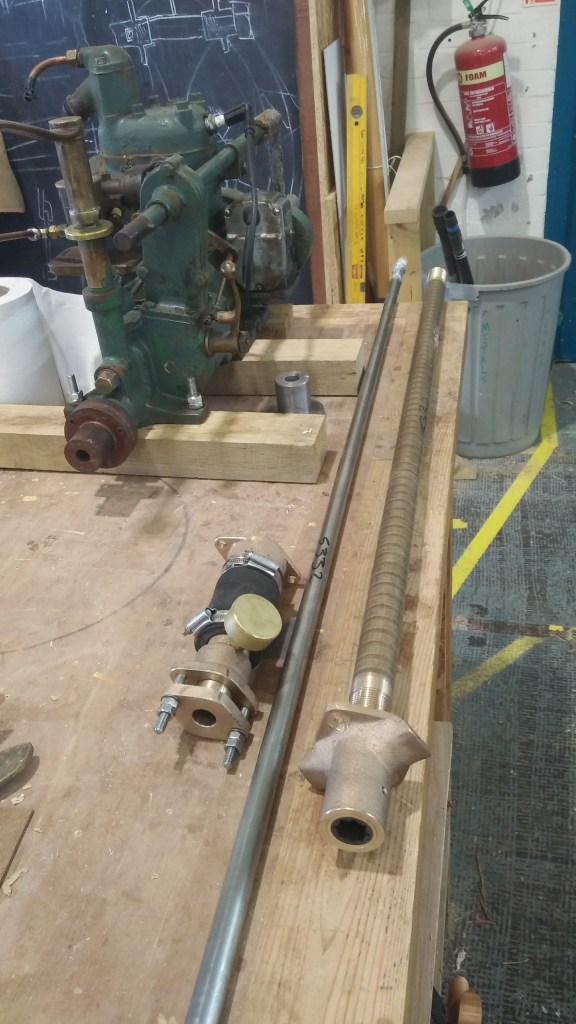
Nice bits arrived!! Stern tube with cutlas bearing and prop shaft…new 10” propeller is being manufactured.
The Start of the Building Process Now…The “BackBone” of the boat is built first. This is the Hog, Keel, Stem and Transom.
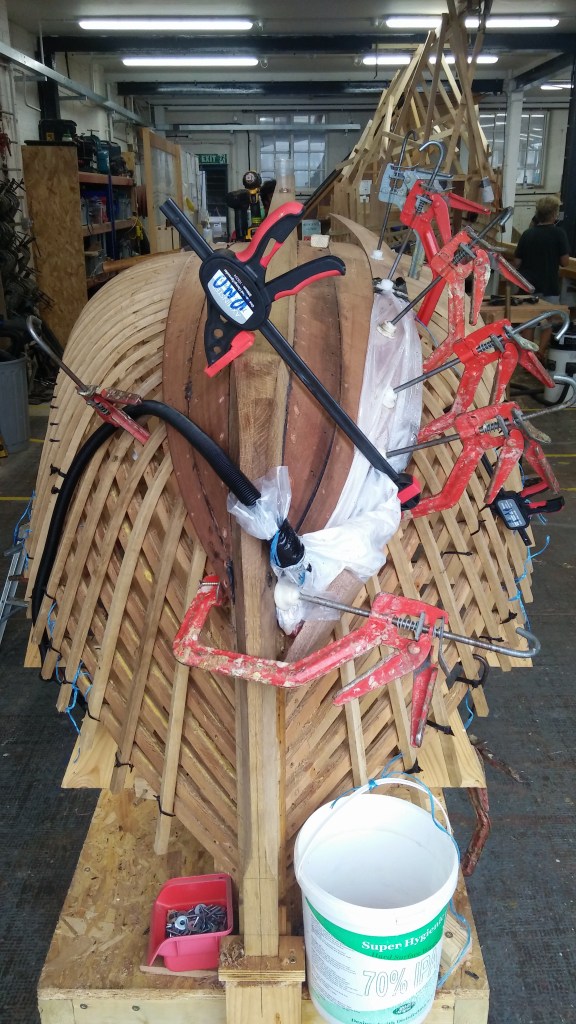
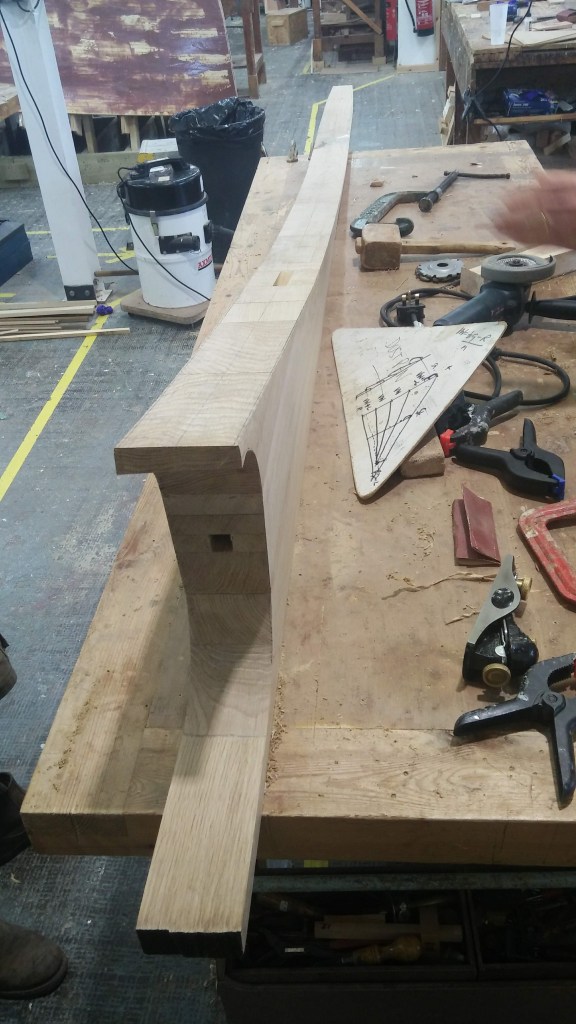
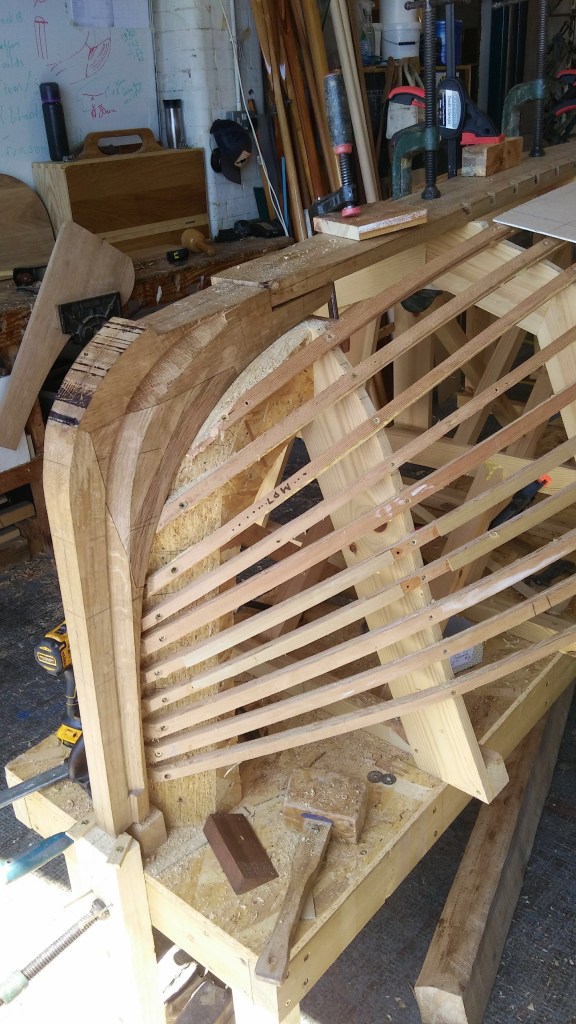
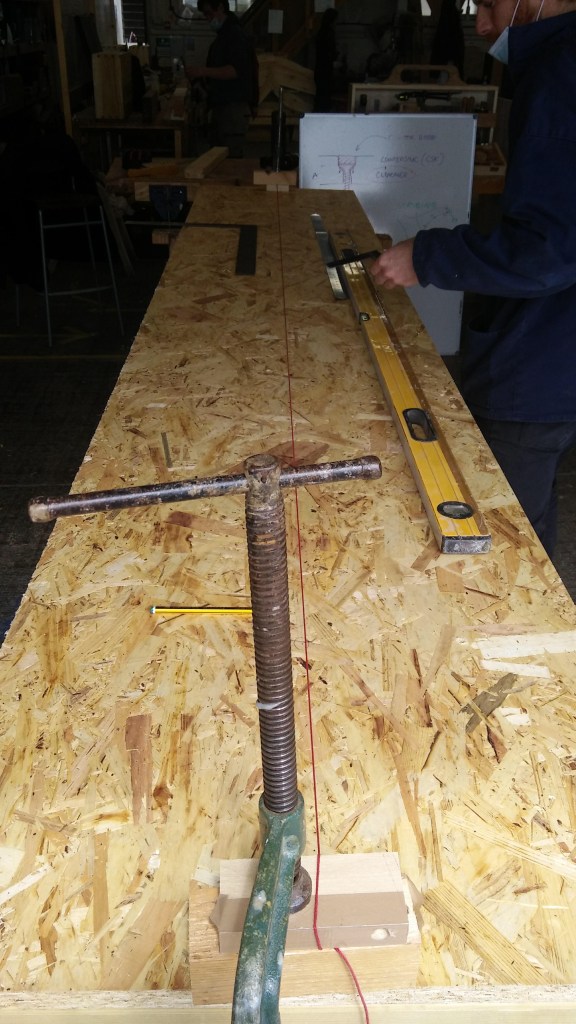
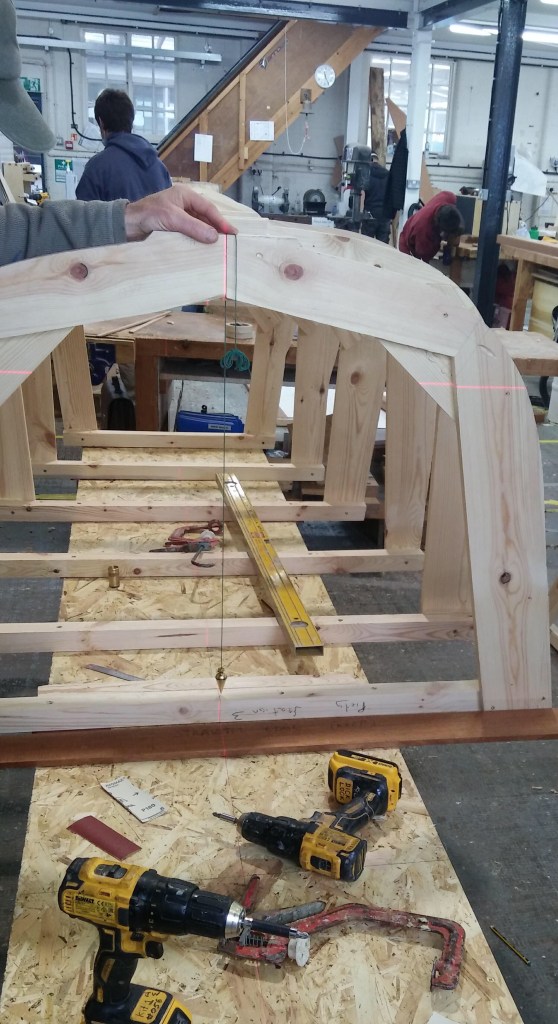
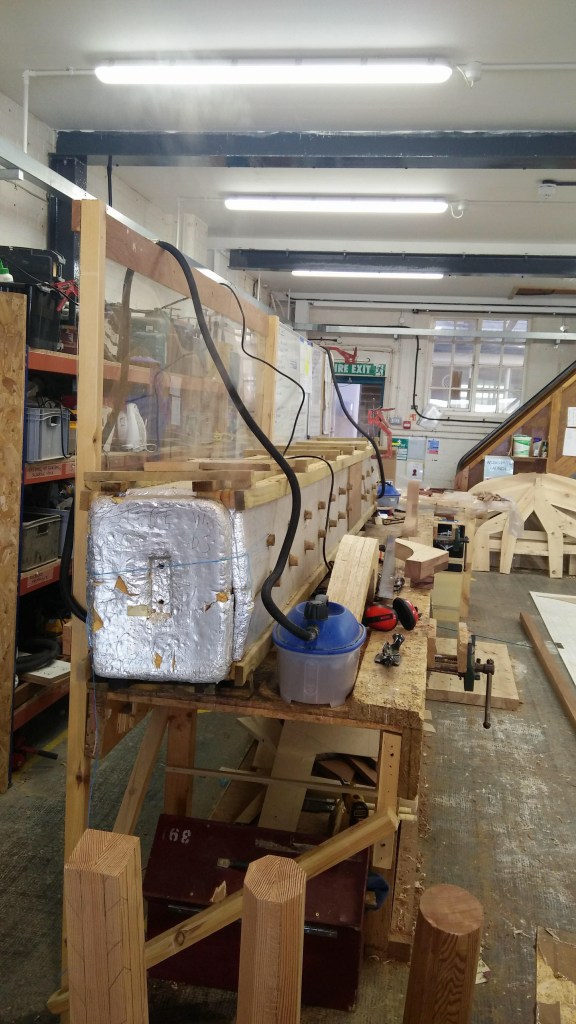
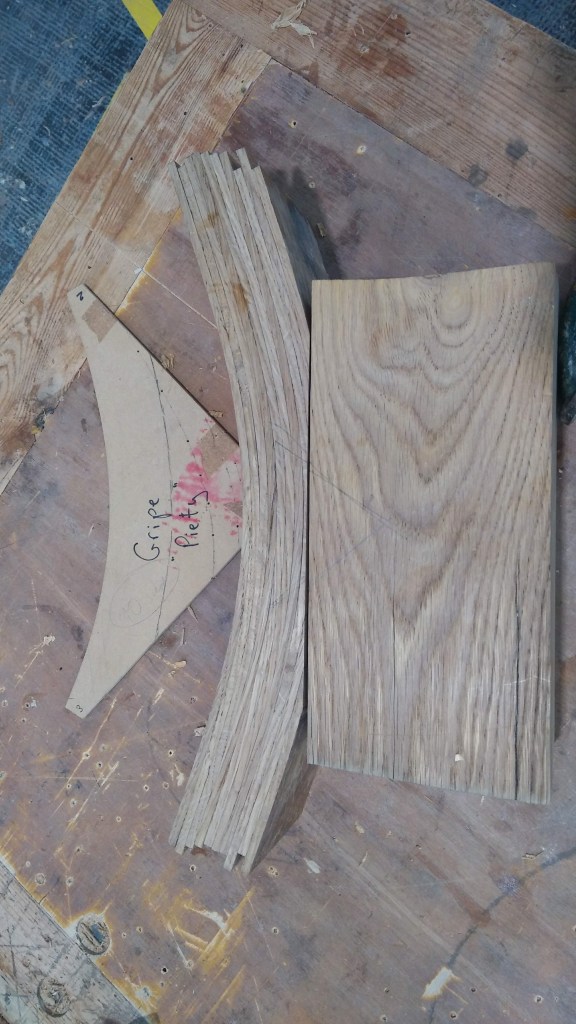
We start off with the base board which will be glued and fixed down firmly to the shop floor. The team building Piety is Dick Locke, John Griffiths and myself.The CentreLine is the key it seems to wooden boat building and making components..We fix the Moulds which were built from the Lofting Plans – see article below. We are using a laser and bob to get it all square.You can begin to see the shape of the boat. She will be built “upside down”.The “Steamer” … this is a simply built box about 11’ long and fed with steam from two wall paper stripper machines. You need about an hour of steaming per inch of timber thickness.Once its out it needs to be fixed down straight away to bend permanently into shape…This is the “HOG” being fitted.The false stem is added and the work of fixing the Ribands can start. Once the ribands are completed around the hull then the timbers or frames of the actual boat can be fixed with the planking. The Transom is from beautiful local oak. This is three pieces jointed/epoxied together with 6mm marine ply tongues.The Stem is being shaped from solid oak but the Gripe needed to be steamed and laminated from 10mm Oak strips..
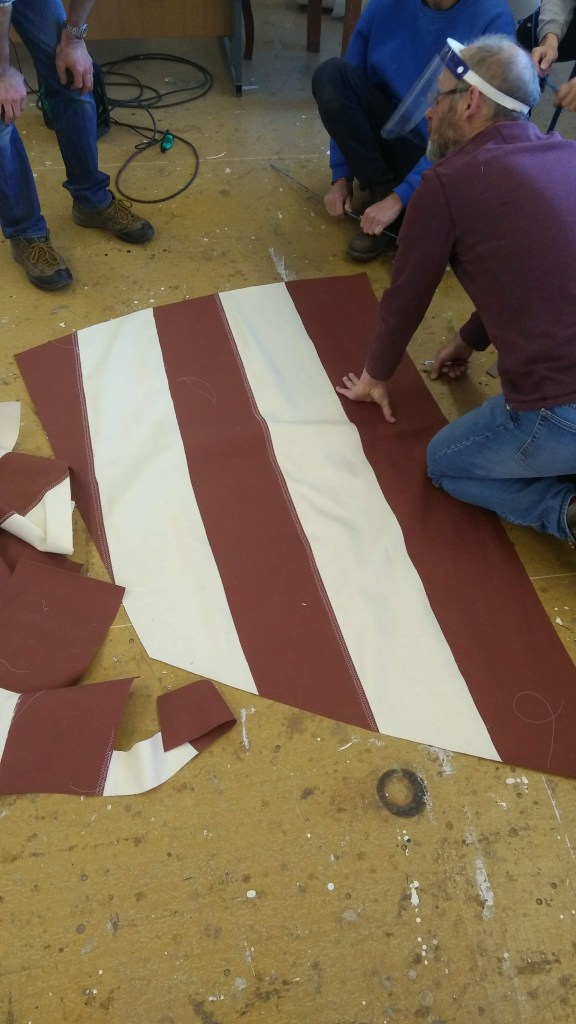
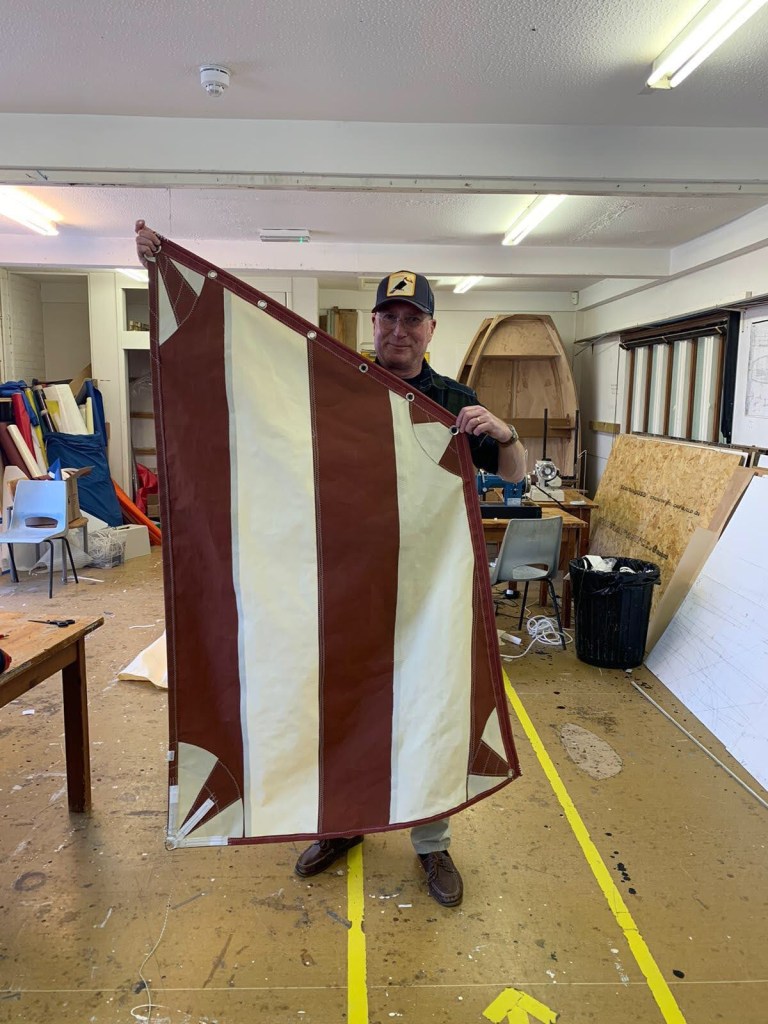
The Lug Sail
Now this little “Lug Sail” was a big team effort..Voila!!Now this is English Elm, a very rare local tree nowadays and as it is green can be steamed easily for Piety’s timbers..
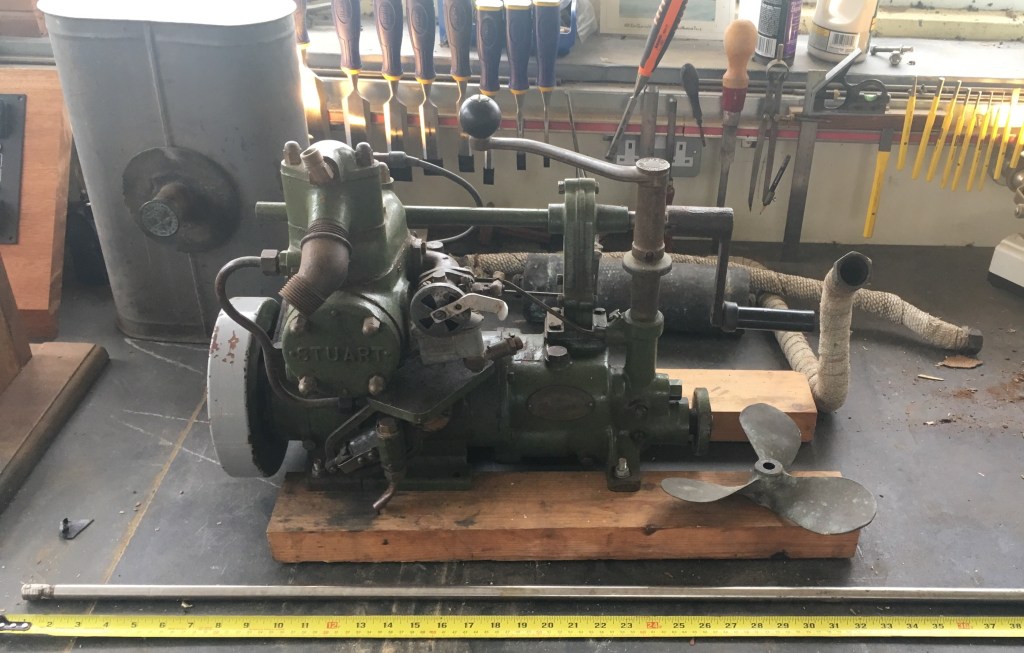
That little engine!
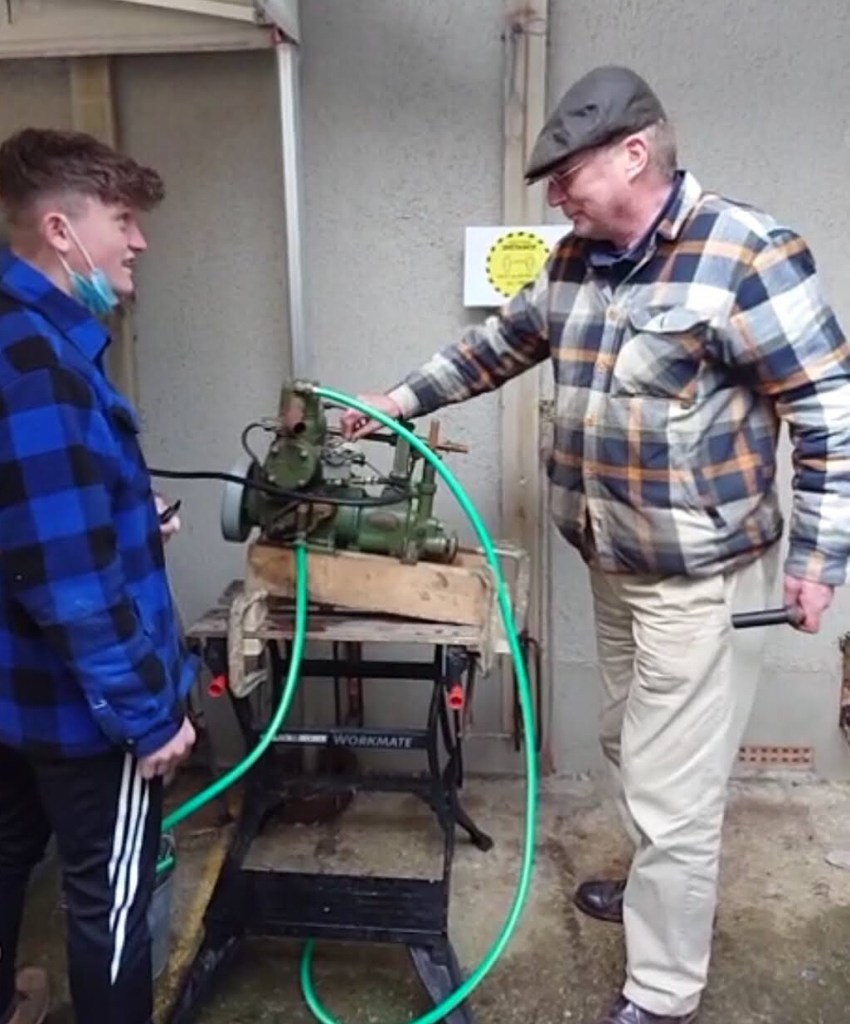
Now this little beauty has come from a small boat in Exmouth so I am not sure of the condition but it seems very good. Looking at the build plate it is from the 1960s, so some 50 years old. It is one of the famous British built single cylinder engines from Stuart Turner. It is the R3M but with the forward and reverse gear box. It operates at 1500 rpm and 1000 rpm at the prop, giving 1.5 BHP and 123cc. So it should be fine for the small tender adding 52kg in weight.
The question now is: … will it start??
Yep! There she goes. I have serviced the carb etc but need to get the water pump operating now. Otherwise it sounds great and quickly starts..phew
Preparing the Keel and Hog
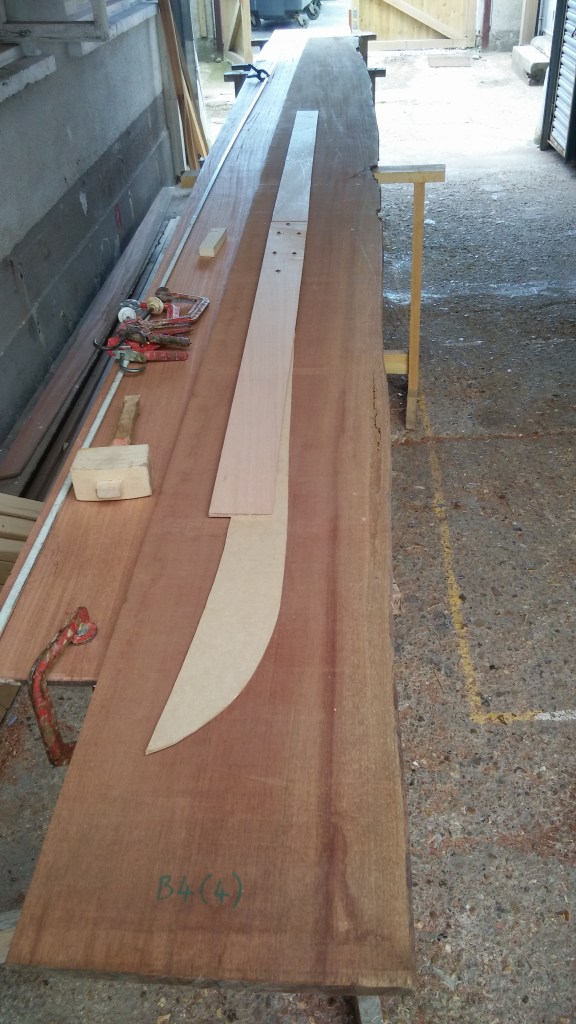
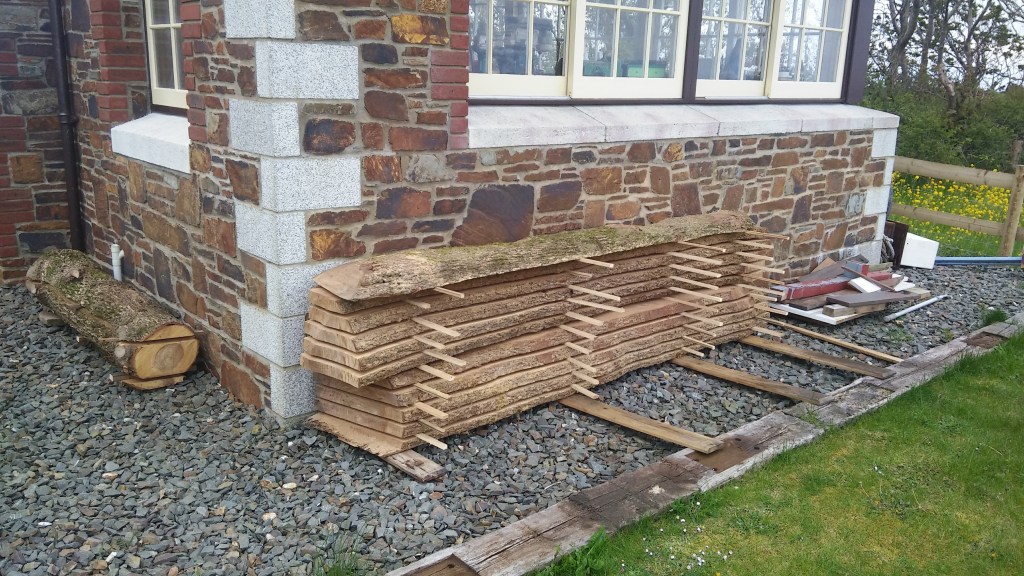
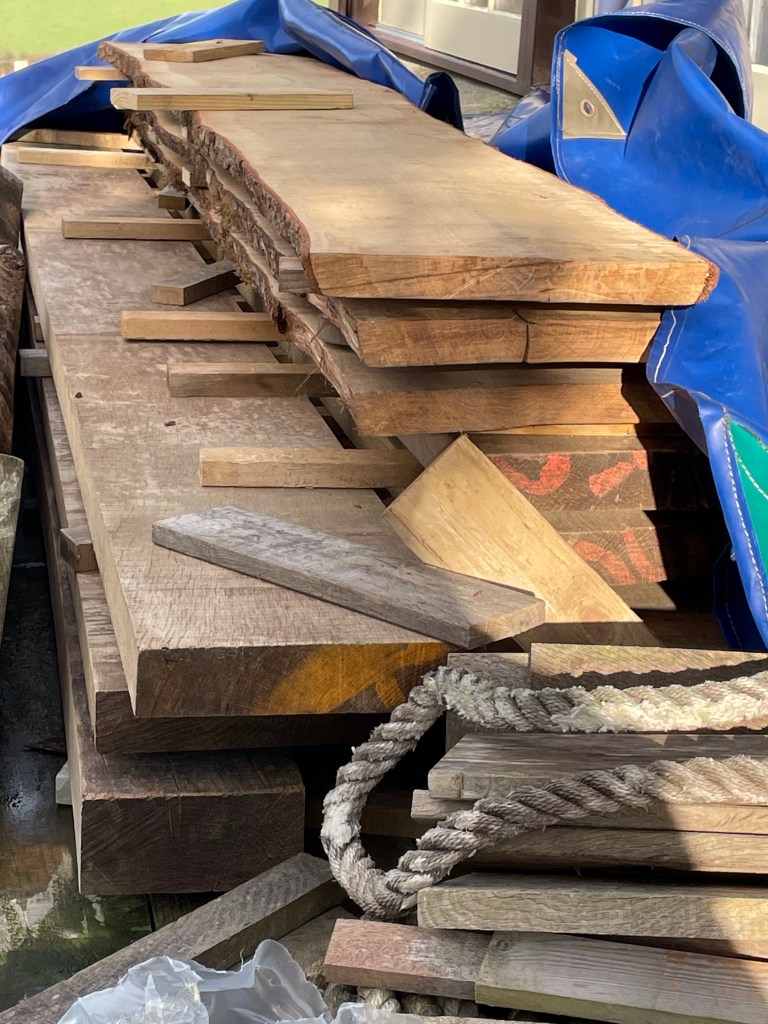
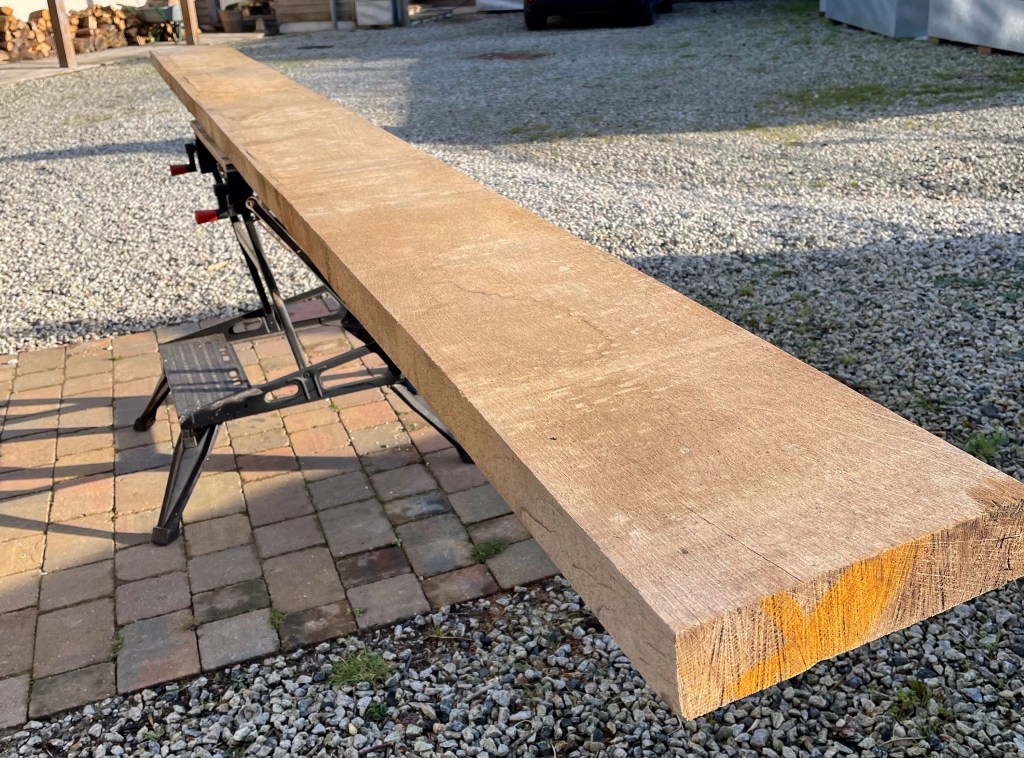
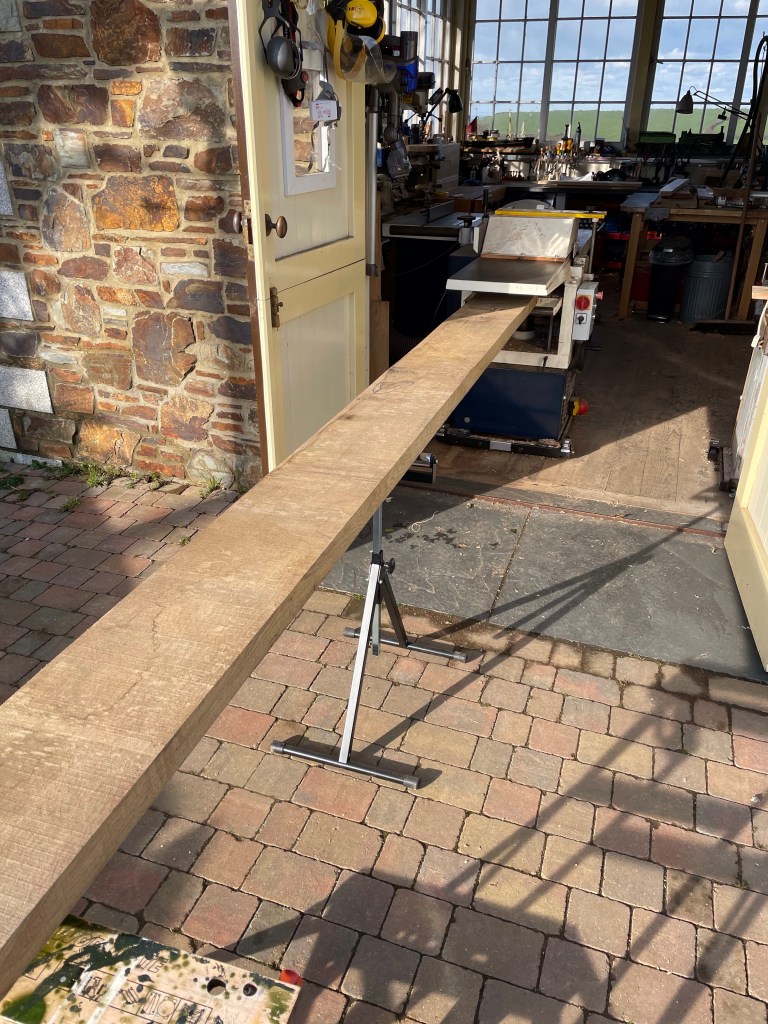
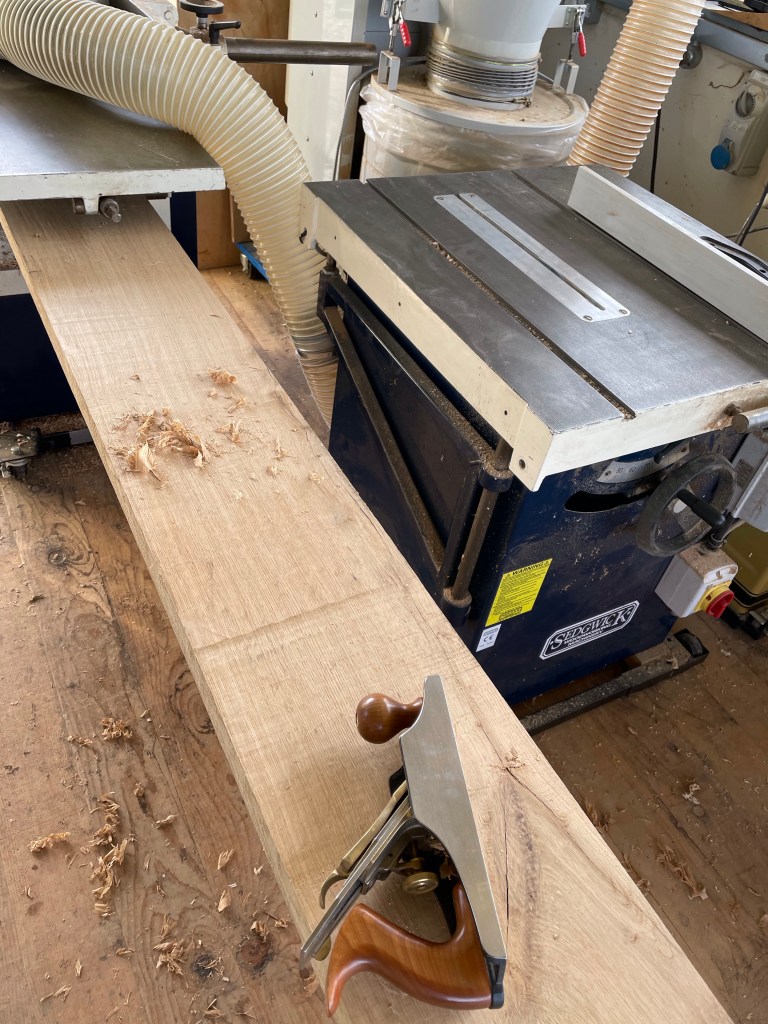
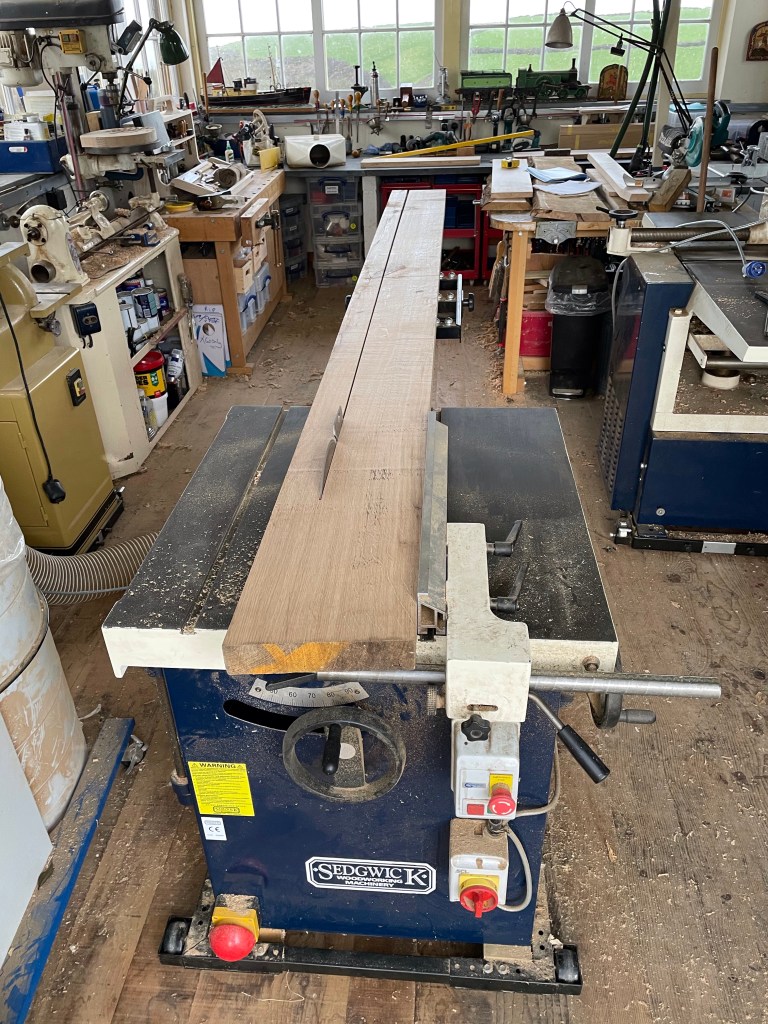
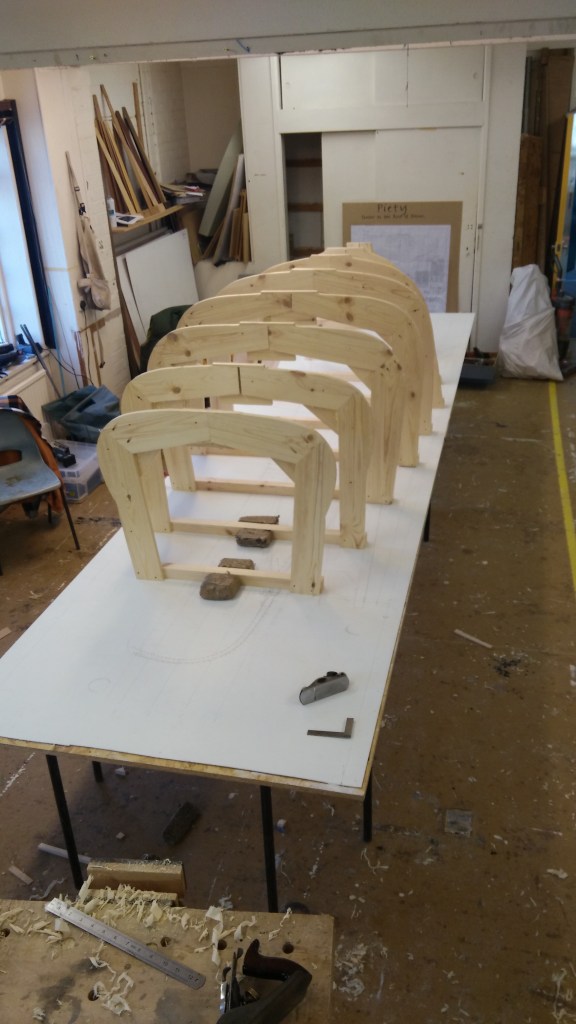
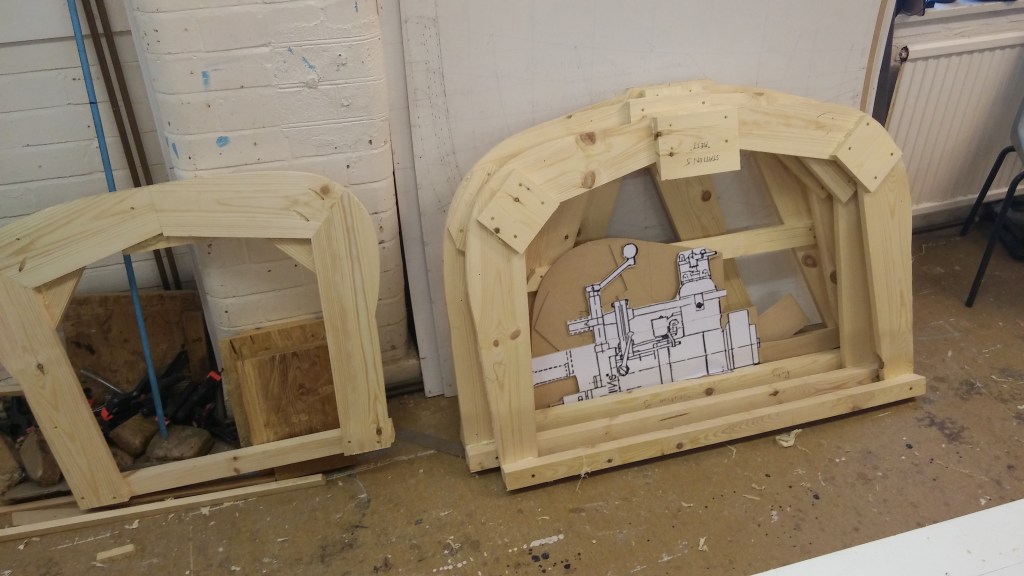
The Wood StackI am going to try and get 150mm wide, 35mm thick and 3200mm long from this chunk…quite rough but I have over 200mm x 60mm x 3400mm to play with..Helped by hand through the Planer thickner..”Sedgwick” but with a big roller bearing support at the far end.It got a bit caught up but I was able to change sides at 55mm….the knot will mainly be cut out ….Ripped down to 180mm (using Sedgwick2) and ready for storage and final cuttingThere she is…And so from all this we get the “moulds”..including the engine..
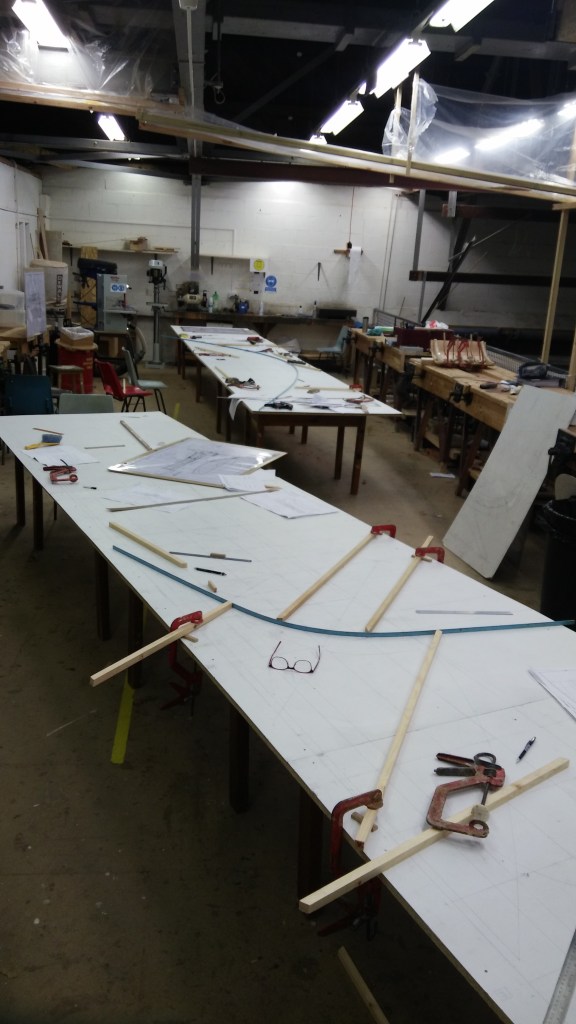
We are now set to “Loft” or draw the boat to full scale, so the backbone and components can be built from accurate measurements…..
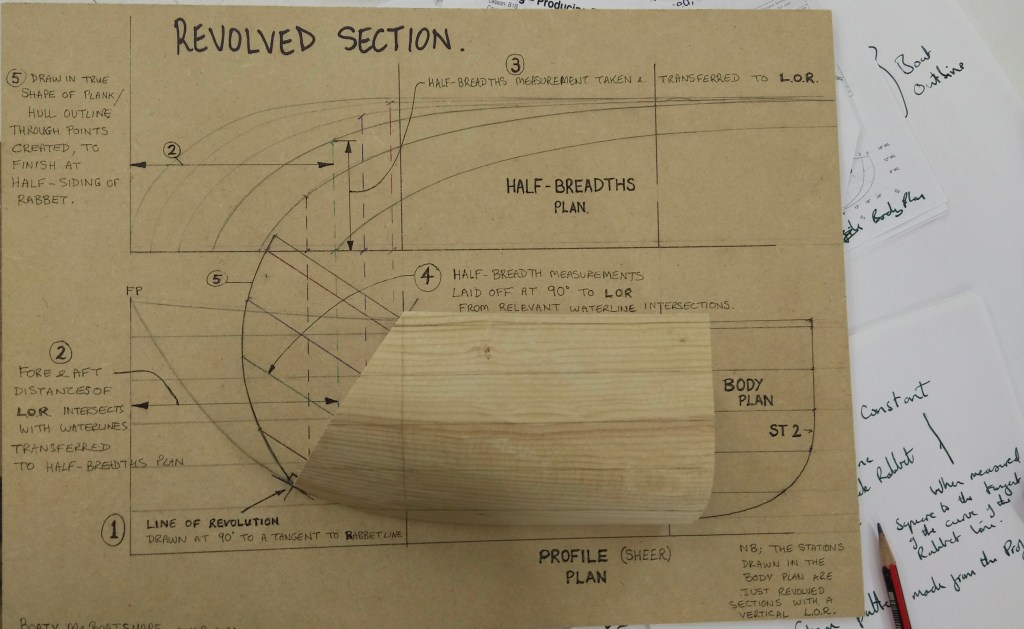
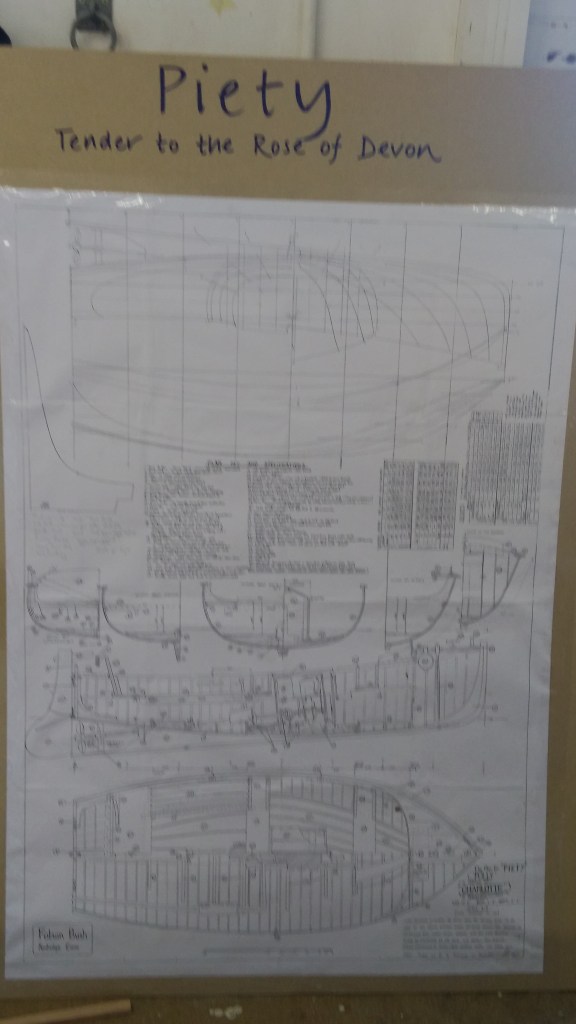
The lofting process involves “revolving” sections in order to outline bevel angles both inside and outside of the boat.I bought the drawing from Fabian Bush, accompanied with his good advice. The original design is by Morgan Giles and is from circa 1920.
 Shipwright At Morwenstow by Richard M Painter